Incorrect needle selection immediately compromises medication absorption, increases patient discomfort, and elevates the risk of localized tissue damage. Standardizing medical inventory presents a complex operational challenge for clinical directors and procurement teams. Patient body mass index (BMI), medication viscosity, specific injection routes, and varying injection sites demand highly specialized equipment. Relying on a universal approach inevitably leads to poor clinical outcomes and increased occupational hazards.
You need a systematic, evidence-based framework for evaluating and selecting the correct equipment for clinical environments. This approach balances patient outcomes with procurement efficiency and stringent safety compliance. By understanding the precise mechanical specifications required for different tissue depths and fluid dynamics, clinical teams can optimize drug delivery while minimizing adverse events.
- Route Dictates Baseline Specifications: Intramuscular (IM), subcutaneous (Sub-Q), and intradermal (ID) injections require distinct baseline combinations of gauge and length to reach the targeted tissue layer accurately.
- Patient Physiology Modifies the Baseline: Standard needle lengths must be adjusted based on the patient’s age, weight, and subcutaneous fat distribution to prevent inadvertent bone contact or improper drug delivery.
- Viscosity Determines Gauge: Highly viscous medications necessitate lower-gauge (wider diameter) hypodermic needles to ensure a consistent flow rate and reduce injection pressure.
- Safety Compliance is Non-Negotiable: Evaluating safety-engineered mechanisms is a mandatory step for mitigating occupational exposure and adhering to regulatory standards (e.g., OSHA).
Core Success Criteria in Needle Selection
Target Tissue Depth and Route of Administration
The route of administration dictates the exact anatomical layer the medication must reach. Intramuscular (IM) injections must penetrate through the epidermis, dermis, and subcutaneous fat to deposit medication directly into the muscle fascia. Muscle tissue is highly vascularized, allowing for rapid systemic absorption of the administered drug. Subcutaneous (Sub-Q) injections target the adipose tissue layer situated just below the dermis. This layer has fewer blood vessels, resulting in a slower, more sustained absorption rate. Intradermal (ID) injections require highly precise delivery into the dermis itself, a layer rich in capillary beds but designed for minimal volume absorption.
Missing the target tissue layer fundamentally alters pharmacokinetics and drug efficacy. Delivering an IM medication into the subcutaneous tissue delays absorption and reduces the peak serum concentration of the drug. It also frequently causes severe tissue irritation, sterile abscesses, or localized necrosis. Conversely, injecting a Sub-Q medication into the muscle accelerates absorption beyond intended therapeutic parameters. This poses severe physiological risks for medications like insulin, where rapid uptake can trigger sudden, life-threatening hypoglycemia.
Medication Viscosity and Volume Constraints
The physical properties of the medication dictate the required internal diameter of the equipment. Aqueous solutions, such as normal saline, standard vaccines, or insulin, flow easily through narrow lumens with minimal plunger pressure. Oil-based suspensions, such as testosterone cypionate, penicillin G benzathine, or certain antipsychotic depot injections, feature high viscosity. These thicker medications require lower-gauge, wider-diameter Hypodermic Needles to ensure a consistent flow rate and prevent the lumen from clogging during administration.
Maximum volume thresholds per injection site directly influence the choice of syringe capacity and its corresponding pairing. The deltoid muscle typically accommodates a maximum of 1mL, necessitating a smaller syringe barrel for precise dosing. The ventrogluteal site can handle up to 3mL in an average adult. Forcing a high-volume injection through a narrow gauge creates excessive pressure within the syringe barrel. This increases the risk of mechanical failure, such as the hub detaching from the syringe, and causes severe patient discomfort due to the high-velocity fluid stream damaging tissue fibers.
Medication Viscosity and Recommended Gauge Parameters
| Medication Type | Viscosity Level | Recommended Gauge Range | Clinical Examples |
| Aqueous Solutions | Low | 25G - 30G | Insulin, Heparin, Standard Vaccines |
| Light Suspensions | Medium | 22G - 25G | Certain antibiotics, Steroid injections |
| Oil-Based Depot | High | 18G - 21G | Testosterone, Haldol Decanoate |
| Blood Products | High (Cellular) | 16G - 18G | Packed RBCs, Whole Blood |
Patient-Specific Variables (Age, BMI, and Muscle Mass)
Standard sizes routinely fail when applied across diverse patient populations. Pediatric populations require significantly shorter lengths to prevent accidental bone strikes. A 5/8-inch length is often sufficient for a pediatric IM injection in the vastus lateralis, whereas an adult requires at least 1 inch. Adult populations demand variations based entirely on muscle mass and fat distribution. You cannot use the same specifications for every adult patient admitted to a unit.
Bariatric patients possess thicker layers of adipose tissue. Administering an IM injection to a bariatric patient often requires a length of 1.5 to 2 inches to successfully bypass the fat and reach the muscle fascia. Geriatric or cachectic patients present the opposite challenge. Muscle wasting and decreased subcutaneous fat mean that standard lengths will likely strike the bone. For these patients, shorter lengths and specific techniques, such as pinching the muscle mass to elevate it away from the bone, are required to ensure safe delivery.
![Hypodermic needle specifications and clinical application]()
Understanding Needle Specifications: Anatomy, Gauge, and Length
Anatomy of a Hypodermic Needle and Packaging Interpretation
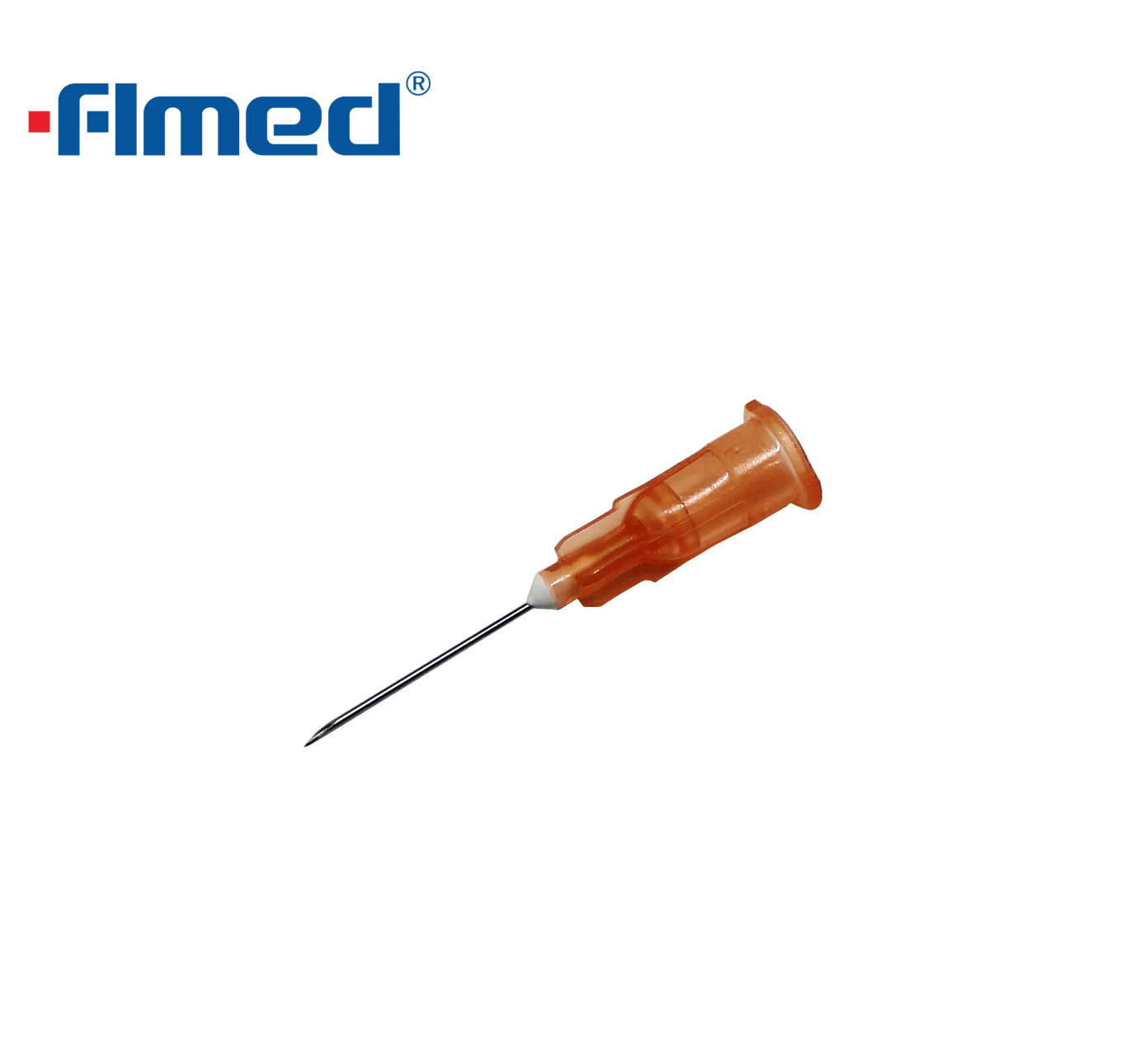
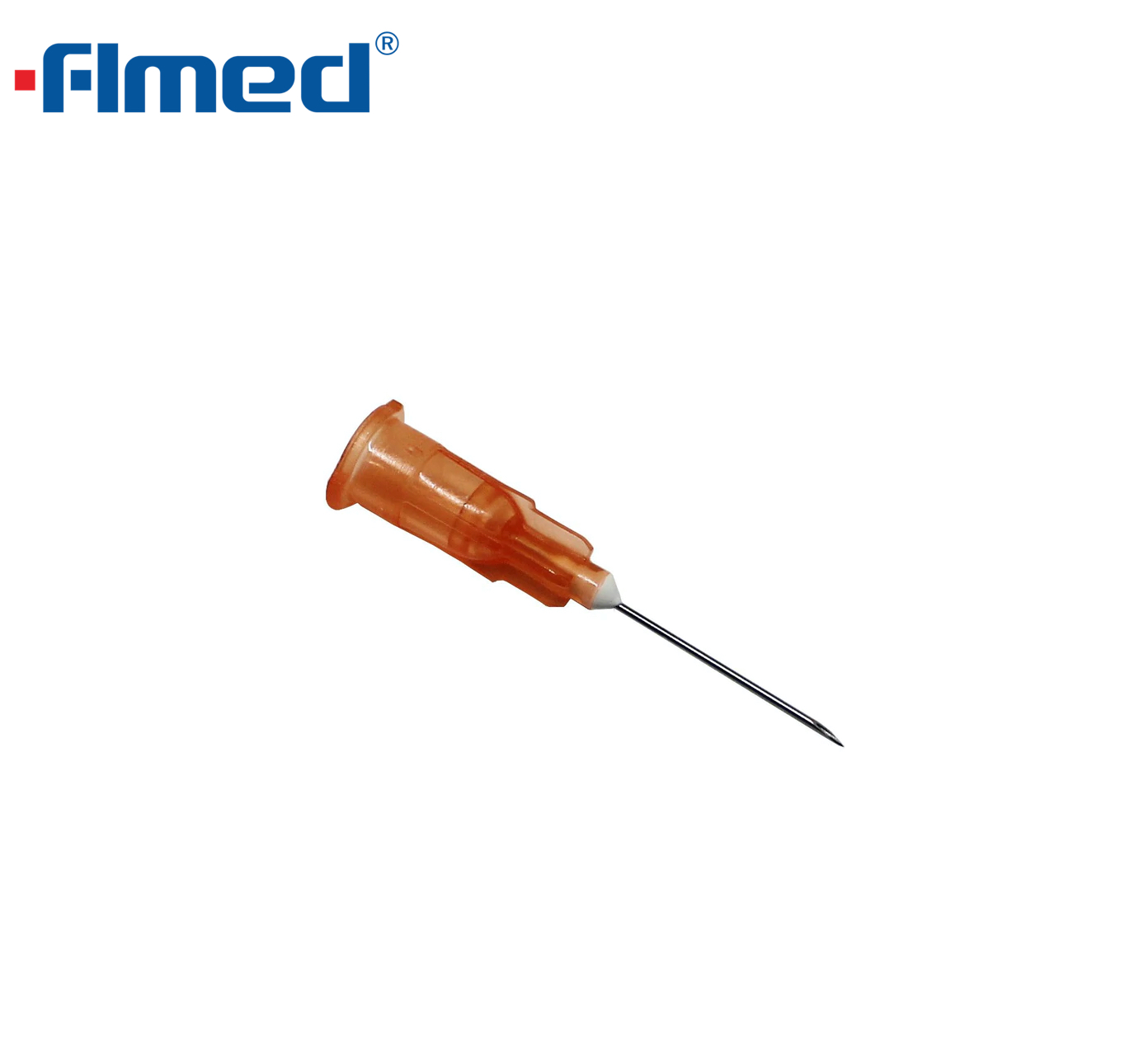
Understanding the physical components is essential for clinical accuracy. The hub is the plastic attachment point that secures the unit to the syringe barrel, typically manufactured from medical-grade polypropylene. The shaft is the stainless steel length that penetrates the tissue. The lumen is the hollow internal bore through which the medication travels. The bevel is the slanted, sharpened tip designed to slice through tissue with minimal trauma. High-quality bevels feature a three-facet grind to maximize sharpness and reduce insertion pain.
Accurately reading packaging labels ensures the correct equipment is selected from inventory. Packaging follows a standardized format. Interpreting "25G x 1"" means the unit features a 25-gauge diameter with a 1-inch shaft length. The gauge always precedes the "G," and the length follows in inches or millimeters. Color-coded hubs often correspond to specific gauges based on ISO standards, though verifying the printed text remains mandatory to prevent administration errors.
The Gauge System Explained (Imperial and Metric)
The gauge system operates on an inverse relationship with the outer diameter. A higher gauge number indicates a narrower diameter, while a lower gauge number indicates a wider diameter. For example, an 18G diameter is significantly wider than a 27G diameter. This system dictates flow rate and injection pressure based on fluid dynamics principles. A small increase in the internal diameter exponentially increases the flow rate for viscous fluids.
Metric diameter equivalents in millimeters provide standardized precision for international clinical settings. Mapping common gauge ranges to their primary clinical applications streamlines the selection process. Insulin and Sub-Q injections typically utilize 26G to 30G to minimize pain. IM injections generally rely on 20G to 25G to accommodate deeper penetration and varying fluid viscosities. Blood donation and rapid fluid resuscitation require 16G to 18G to prevent hemolysis of red blood cells and maximize flow rates during trauma response.
Standard Gauge Equivalents and Clinical Applications
| Gauge (G) | Outer Diameter (mm) | Primary Clinical Application | Typical Hub Color |
| 18G | 1.20 mm | Blood drawing, rapid fluid administration | Pink |
| 21G | 0.80 mm | Routine venipuncture, viscous IM injections | Green |
| 23G | 0.60 mm | Standard IM injections, pediatric venipuncture | Blue |
| 25G | 0.50 mm | Standard Sub-Q injections, pediatric IM | Orange |
| 27G | 0.40 mm | Intradermal injections, local anesthetics | Grey |
| 30G | 0.30 mm | Insulin administration, fine cosmetic injections | Yellow |
Length Variations and Clinical Applications
Standard lengths typically range from 1/4 inch (6mm) to 3 inches (75mm). The chosen length dictates the exact depth of tissue penetration. Metric equivalents in millimeters provide exact depth precision, which is particularly useful for specialized subcutaneous therapies or ultrasound-guided joint injections. Common lengths include 1/2 inch (12.7mm), 5/8 inch (16mm), 1 inch (25mm), and 1.5 inches (38mm).
The clinical risks of utilizing the wrong length are severe. Utilizing a shaft that is too short for an IM injection results in subcutaneous pooling of the drug. This causes erratic absorption and localized tissue necrosis. Utilizing a shaft that is too long risks a periosteal strike. Hitting the bone causes intense patient pain, damages the delicate bevel, and can lead to periostitis or bone infection.
Hub Types and Syringe Compatibility
Evaluating the structural differences between syringe connections ensures mechanical stability during administration. Luer Lock hubs feature threaded designs that screw securely onto the syringe barrel. Luer Slip hubs rely purely on a push-on, friction-fit mechanism to stay attached. Both conform to the ISO 80369 standard for a 6% taper, but their mechanical security differs vastly.
Decision criteria for mandating Luer Lock connections depend on the procedure's physical demands. High-pressure injections, viscous medications, and the administration of hazardous drugs (such as chemotherapeutics) strictly require Luer Lock connections. The threaded design prevents accidental detachment under pressure, eliminating the risk of medication spills, inaccurate dosing, and occupational exposure to toxic substances.
Selecting Hypodermic Needles by Injection Route
Intramuscular (IM) Injections
Standard specifications for IM injections in average adults range from 20G to 25G, with lengths between 1 and 1.5 inches. The specific site selection directly impacts the required length and gauge. The deltoid muscle, located in the upper arm, typically requires a 1-inch length for average adults. The ventrogluteal site, preferred for larger volumes up to 3mL, often requires a 1.5-inch length to successfully penetrate the gluteal fascia. The vastus lateralis in the thigh requires careful assessment of muscle mass before selecting a 1-inch or 1.25-inch length.
Implementation risks for IM injections require strict anatomical knowledge. You must address the risk of sciatic nerve injury or vascular penetration, particularly when using the dorsogluteal site (which is largely deprecated in modern practice due to nerve proximity). Emphasize the need for appropriate length to bypass adipose tissue entirely. Utilizing the Z-track method during IM administration prevents medication leakage into the subcutaneous track. This technique involves pulling the skin laterally, inserting at 90 degrees, injecting slowly, and releasing the skin after withdrawal to seal the puncture tract.
Subcutaneous (Sub-Q) Injections
Standard specifications for Sub-Q injections range from 25G to 30G, with lengths strictly between 3/8 inch and 5/8 inch. Injection site variations include the abdomen, the anterior thigh, and the outer posterior aspect of the upper arm. The abdomen provides the most consistent absorption rates for medications like heparin and insulin. Site rotation is mandatory for frequent Sub-Q injections to prevent lipohypertrophy, which is the buildup of fibrous fat tissue that blocks drug absorption.
Pinching technique requirements and the angle of insertion depend entirely on the selected length and the patient's body fat. A 5/8-inch length typically requires a 45-degree insertion angle to remain in the subcutaneous layer. A shorter 3/8-inch or 1/2-inch length can often be inserted at a 90-degree angle. Mitigating the risk of accidental IM injection in patients with low body fat requires assessing the pinched tissue fold and adjusting the insertion angle accordingly. You should only pinch the fat, not the underlying muscle.
Intradermal (ID) Injections
Standard specifications for ID injections range from 25G to 27G, with very short lengths between 1/4 inch and 1/2 inch. Bevel orientation is critical for ID administration; the bevel must face up during insertion. This orientation allows the medication to separate the dermal layers, creating a visible wheal or bleb on the surface of the skin.
Precise depth control is necessary for tuberculin testing (Mantoux test), allergy screens, and local anesthetic infiltration. The insertion angle must remain shallow, typically between 5 and 15 degrees. The outline of the bevel should be visible just under the skin before you depress the plunger. Implementation risks include leakage of the medication onto the skin surface or accidental subcutaneous delivery. Subcutaneous delivery of an ID diagnostic test renders the results invalid, requiring the patient to undergo a repeat procedure.
Evaluating Safety-Engineered Needles and Compliance
Regulatory Standards and Needlestick Prevention
The Needlestick Safety and Prevention Act and OSHA guidelines (specifically the Bloodborne Pathogens Standard 29 CFR 1910.1030) mandate strict operational requirements for healthcare facilities. These regulations require the implementation of engineering and work practice controls to eliminate or minimize employee exposure to bloodborne pathogens. Utilizing safety-engineered devices is not a clinical preference; it is a federal mandate designed to protect workers from HIV, Hepatitis B, and Hepatitis C.
The institutional liability associated with utilizing non-safety equipment in standard practice is massive. Facilities face severe regulatory fines, workers' compensation claims, and legal action if an employee sustains a sharps injury from a non-compliant device. Standardizing safety mechanisms across all departments ensures continuous compliance and protects frontline healthcare workers from preventable physical and psychological trauma.
Active vs. Passive Safety Mechanisms
Comparing safety features requires understanding how they impact clinical workflow. Active safety features require deliberate clinician activation immediately after the injection. Examples include hinged shields that the user pushes over the tip with their thumb or a hard surface, or sliding sheaths pushed forward over the shaft. If the clinician fails to activate the mechanism, the sharp remains exposed, defeating the purpose of the device.
Passive safety features deploy automatically without user intervention. Examples include automatic retraction mechanisms where the shaft pulls back into the syringe barrel the moment the plunger is fully depressed. Passive mechanisms offer superior protection because they eliminate the reliance on user compliance. However, evaluating the impact of these mechanisms on user workflow is necessary, as automatic retraction can sometimes cause a slight mechanical kickback during the final stage of injection, which may startle untrained staff.
Cost-Benefit Analysis of Safety Hypodermic Needles
Framing the conceptual trade-offs requires looking beyond the initial purchase price. Safety-engineered Needles carry a higher upfront per-unit cost compared to conventional, non-safety alternatives. However, this initial expenditure must be weighed against the long-term financial and human cost of occupational exposure incidents.
A single needlestick injury initiates a cascade of expensive protocols. Post-exposure prophylaxis (PEP) medications, baseline and follow-up laboratory testing, lost labor hours, and potential workers' compensation claims cost facilities thousands of dollars per incident. Investing in high-quality safety mechanisms drastically reduces these incidents. The higher upfront cost yields significant long-term financial protection and preserves staff well-being, making it a sound operational investment.
Procurement and Standardization Strategies for Clinical Settings
Balancing Inventory Complexity with Clinical Needs
Providing a framework for consolidating inventory prevents supply rooms from becoming unmanageable while ensuring patient-specific care requirements are met. Clinical procurement teams must audit usage data to identify the most frequently utilized sizes. Redundant gauges and lengths that serve identical clinical purposes should be eliminated to streamline ordering processes and reduce storage footprint. For example, if a unit stocks both 22G x 1" and 23G x 1" for standard IM injections, standardizing to one size reduces inventory bloat.
Discussing the role of pre-attached combinations versus separate components is vital for inventory management. Pre-attached syringe combinations streamline workflows for high-volume, standardized medications like vaccines or insulin. They reduce preparation time and minimize the risk of contamination during assembly. Purchasing components separately offers necessary flexibility for specialized medication types, allowing clinicians to mix and match syringe capacities with specific gauges based on unique patient presentations and medication viscosities.
Evaluating Manufacturer Reliability and Quality Control
Identifying key indicators of manufacturing quality ensures clinical efficacy and patient comfort. Silicone coating is a critical quality indicator; high-quality manufacturers apply medical-grade silicone to the shaft to provide lubricity. This significantly reduces tissue drag and patient pain during insertion. Bevel sharpness consistency prevents tissue tearing and minimizes bleeding at the injection site. Cheaply manufactured alternatives often have microscopic burrs on the bevel that cause severe tissue trauma. ISO certification verifies that the manufacturer adheres to strict international quality management standards.
Assessing supply chain resilience protects facilities from sudden stockouts. The clinical supply chain is vulnerable to global disruptions. Dual-sourcing critical sizes ensures that if the primary manufacturer experiences production delays, a secondary approved vendor can immediately fill the gap. Procurement teams must validate that secondary suppliers meet the exact same quality control and safety mechanism standards as the primary vendor to ensure seamless clinical transitions.
Conclusion
Optimal selection is a calculated intersection of injection route, medication properties, injection site, and patient anatomy, strictly underpinned by safety compliance. Treating this equipment as generic commodities compromises therapeutic efficacy and endangers both patients and healthcare workers. Precision in selection directly translates to precision in patient care.
The shortlisting logic follows a strict decision tree. First, identify the target tissue and the specific anatomical site. Second, adjust the gauge to accommodate the medication viscosity and the syringe volume constraints. Third, modify the shaft length based on the patient's BMI and muscle mass to ensure accurate depth penetration. Finally, ensure the selected unit features an appropriate safety mechanism compatible with the facility's compliance protocols.
Clinical procurement teams and unit managers should take the following steps:
- Conduct a comprehensive inventory audit to identify redundant or non-compliant stock on the supply room shelves.
- Review current usage data against updated clinical guidelines to ensure the available sizes match actual patient demographics.
- Trial new safety-engineered options with frontline nursing staff to evaluate workflow impact before finalizing standardization contracts.
- Implement mandatory training sessions focusing on anatomical site assessment and proper safety mechanism activation.
FAQ
Q: What is the standard needle size for an intramuscular (IM) injection?
A: The standard size for an IM injection in an average adult ranges from 20G to 25G in diameter, with a length of 1 to 1.5 inches. Variations are required based on the specific injection site (deltoid vs. ventrogluteal) and the patient's BMI. Bariatric patients may require up to 2 inches, while pediatric patients require shorter lengths.
Q: How do you read the packaging on hypodermic needles?
A: Packaging follows a standard format where the first number followed by a "G" indicates the gauge or outer diameter. The second number indicates the length of the shaft in inches. For example, "25G x 1"" means the unit has a 25-gauge diameter and a 1-inch length.
Q: How does medication viscosity affect the choice of needle gauge?
A: Thicker, highly viscous medications require a lower gauge, which means a wider internal diameter. A wider diameter allows the thick fluid to flow properly, preventing the lumen from clogging and stopping dangerous pressure buildup inside the syringe barrel during administration.
Q: What is the difference between a Luer Lock and a Luer Slip needle hub?
A: A Luer Lock hub features a threaded design that securely twists and locks onto the syringe barrel, preventing accidental detachment under pressure. A Luer Slip hub relies purely on a push-on friction fit. Luer Locks are mandated for viscous fluids, high-pressure injections, and hazardous drugs.
Q: Which needle length is required for subcutaneous injections?
A: Subcutaneous injections require a standard length ranging from 3/8 inch to 5/8 inch. This short length ensures the medication is deposited strictly into the adipose tissue layer. The exact length chosen dictates whether the clinician uses a 45-degree or 90-degree insertion angle.
Q: Why are safety-engineered hypodermic needles required in clinical settings?
A: Safety-engineered devices are mandated by OSHA regulations and the Needlestick Safety and Prevention Act. They feature active or passive mechanisms that cover or retract the sharp tip immediately after use. This prevents the transmission of bloodborne pathogens via accidental occupational needlestick injuries.
Q: Can you use the same needle to draw up medication and administer the injection?
A: No. Puncturing the rubber stopper of a medication vial blunts the delicate bevel. Using the same blunted tip to administer the injection causes significant tissue trauma, increased pain, and a higher risk of localized bruising. You should always change to a fresh unit before administration.

 English