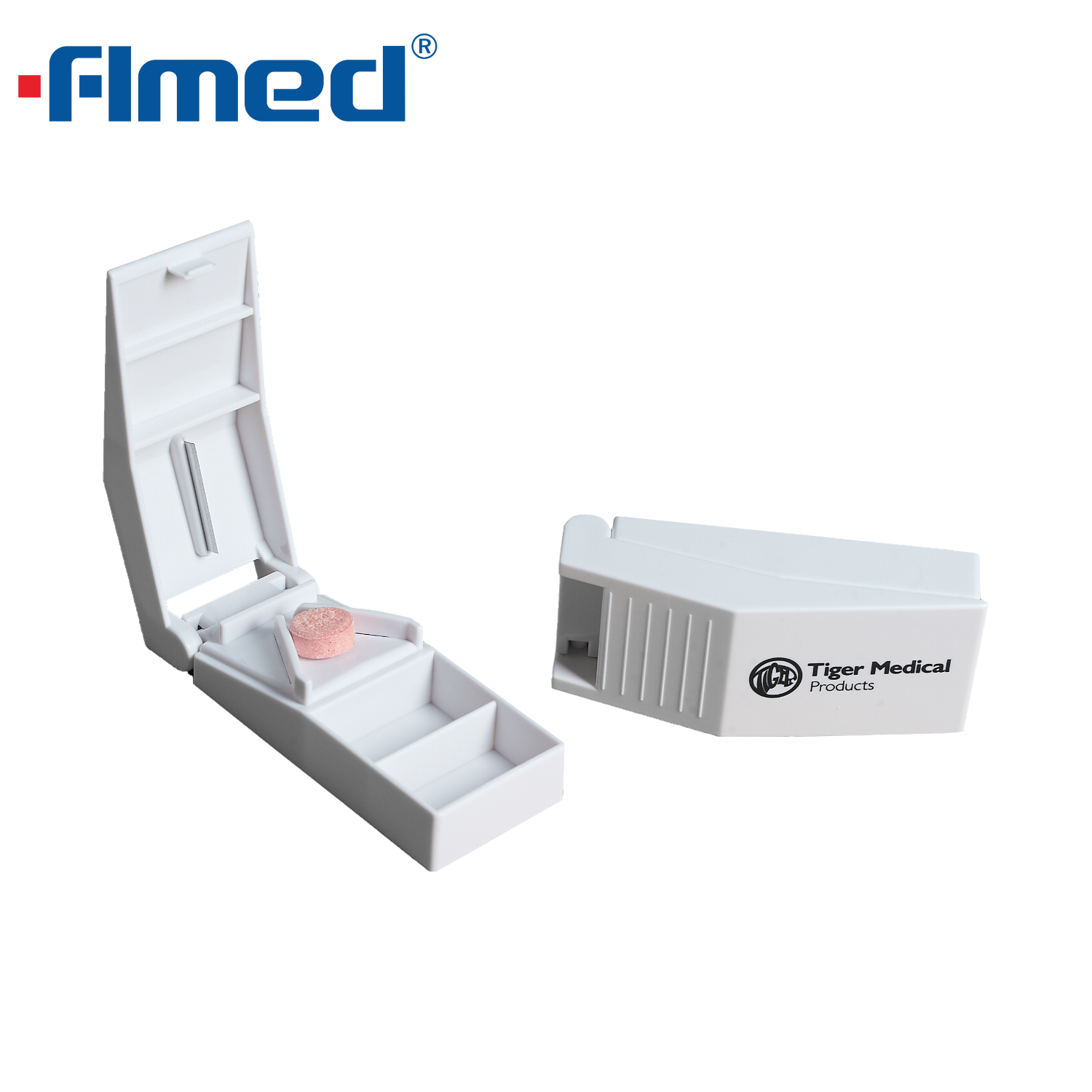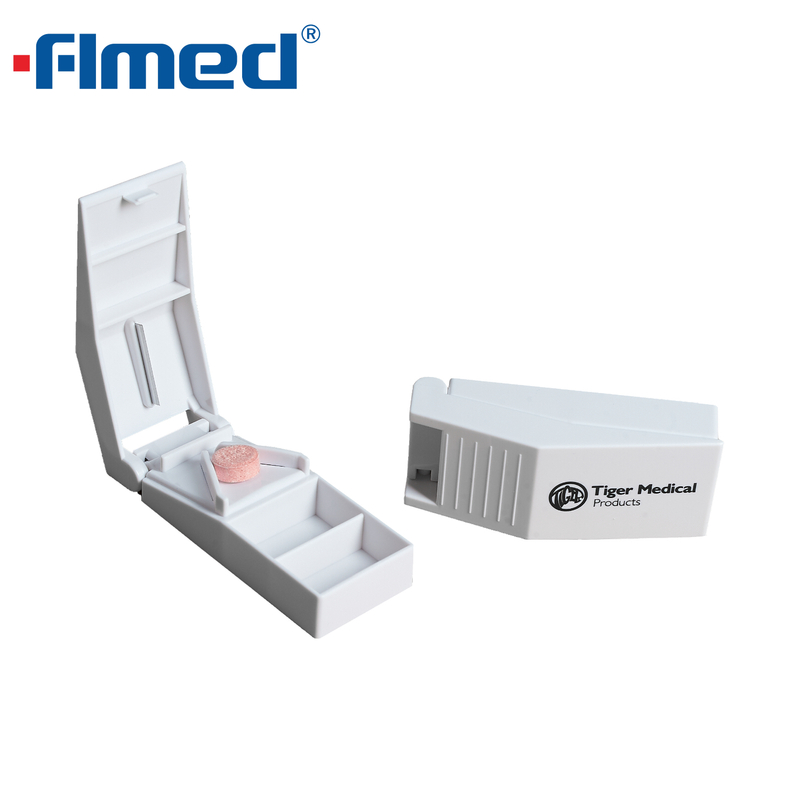
Aligning a glossy, five-millimeter blood thinner under the edge of a heavy chef's knife is a mechanical nightmare. One slight slip of the hand shatters the medication into an unusable, powdery mess. Patients and caregivers frequently encounter this highly frustrating medical challenge when attempting to divide tiny medications accurately. When a physician prescribes a half-dose of a micro-tablet, the makeshift approach of using household utensils almost always results in uneven halves and wasted medication.
Small medications are notoriously difficult to split cleanly due to their minimal surface area and dense composition. For treatments requiring strict dosing protocols, such as cardiovascular drugs or thyroid hormones, this lack of precision is not merely an inconvenience; it is a direct health risk. Fortunately, a dedicated splitting device serves as the ultimate precision tool designed specifically to resolve this exact challenge. Engineered with specific mechanical advantages, this instrument stabilizes and divides even the smallest medications with clinical exactness.
This comprehensive guide will explore the mechanics of how these devices operate, the technology driving their precision, and how to choose the right tool to ensure perfect, consistent dosing every single time you manage your healthcare regimen.
Key Takeaways
Precision Mechanics: A high-quality device utilizes specialized V-shaped grips or textured silicone bases to hold small tablets firmly in place. This entirely prevents lateral shifting during the cutting process.
High-Fidelity Slicing: Sharp, medical-grade stainless steel blades are strictly essential for achieving exact division and ensuring equal medication distribution across both halves.
Minimizing Waste: Utilizing the proper operational technique, combined with specialized cutter designs, significantly reduces unwanted powdering and preserves therapeutic dosages.
Safety Features: A built-in retractable shield is a crucial safety mechanism for protecting fingers during manual alignment.
Formulation Limits: Always consult a licensed pharmacist before altering a pill. Extended-release or specially formulated capsules should never be crushed or cut.
Why Tablet Geometry Complicates Splitting
Establishing the specific physical difficulties associated with micro-medications is essential for understanding why specialized tools are strictly necessary. Small pills present unique geometric challenges that standard cutting implements simply cannot overcome without compromising the structural integrity of the drug.
The Risk of Uneven Dosing
When dealing with a large, chalky vitamin, a slight deviation off the center line might only represent a negligible fraction of the total active pharmaceutical ingredient. However, when handling a micro-tablet, the margin for error practically disappears. A one-millimeter miscalculation on a small Tablet Size can lead to a drastic percentage difference in the prescribed dose. For medications possessing a narrow therapeutic index, this uneven dosing can lead to adverse side effects or diminished clinical efficacy. Precision is absolutely required to ensure the patient receives the exact intended dosage without fluctuation.
The Frustration of Material Degradation
Beyond the danger of uneven halves, the physical composition of brittle or tiny pills dictates that they tend to shatter violently under blunt compressive force. This fragmentation results in powder and tiny shards breaking away from the main tablet body during the splitting process. Mitigating Crumb Loss is critical because losing even a seemingly insignificant amount of this powder can severely impact the efficacy of micro-dosed medications. A dedicated splitting device is uniquely engineered to slice rather than crush, thereby preserving the structural integrity of the pill.
![Precision Pill Cutter for Small Tablets]()
The Core Mechanics: Engineering a Clean Cut
To fully appreciate how this instrument physically manages tiny objects with such high reliability, one must look at it through an engineering lens. The device relies on fundamental physics, specifically geometric alignment and concentrated shear stress, to achieve consistent results.
V-Shape Holders and Centering Mechanisms
The defining feature of a reliable splitting device is the standard converging V-grip design. This ingenious mechanism automatically centers any irregularly shaped object placed within it. The user slides the pill toward the narrow end of the V-shape until it is securely wedged between the angled walls. As the lid of the device begins to close, this V-shape acts as a stabilizing cradle. It pushes the small pill directly into the exact path of the descending blade. Consequently, the tablet is prevented from spinning or sliding laterally.
The Role of the Blade in Division Accuracy
The blade serves as the most critical functional component of the entire assembly. A standard knife features a thick wedge that forces material apart. In contrast, a specialized pharmaceutical tool requires a thin, double-beveled, medical-grade stainless steel blade. This incredibly sharp edge cleanly slices through the dense powder binders of the pill rather than applying blunt crushing force. Because the thin profile of the blade displaces significantly less material as it moves through the tablet, it guarantees exceptional Split Accuracy. Premium models often utilize 0.8mm thick blades to ensure long-term hygienic operation and resistance to chemical corrosion.
Essential Features for Micro-Tablets
For consumers currently evaluating their options in the medical supply market, knowing exactly what features to look for is paramount. Not all devices are manufactured to the same rigorous standards.
Silicone and Elastomer Grips
While a standard hard-plastic V-grip is somewhat helpful, premium devices elevate this design by incorporating a silicone bed or non-slip elastomer grips along the holding area. This specialized texture prevents small, smooth, or round tablets from sliding backward at the exact millisecond the blade makes contact. The added friction ensures that the pill remains perfectly stationary.
Safety Mechanisms for User Protection
Handling tiny tablets inherently requires placing one's fingers perilously close to the cutting mechanism. Therefore, a built-in Blade Guard is a mandatory safety feature in high-quality models. This retractable plastic shield physically covers the sharp edge of the blade whenever the cutter is open. It retracts automatically only as the lid is pressed down to finalize the cut. This protection is invaluable when elderly patients or individuals with limited dexterity are awkwardly trying to position a tiny pill.
Transparent Lids for Visual Precision
Visual verification serves as the final checkpoint before committing to a cut. Because small pills can occasionally shift slightly as the hinge of the lid begins to close, a clear, transparent top allows the user to look down and verify that the pill has not moved off the center line.
Industry Trends: The Shift Towards Precision Medication Management
Recent market analyses regarding medication adherence tools reveal a significant industry shift toward precision medication management. As pharmaceutical developers increasingly formulate highly concentrated micro-dosed treatments, particularly in cardiovascular and endocrine care, the medical device sector is responding with enhanced splitter technologies. Industry trends show a distinct departure from basic, flimsy plastics in favor of advanced, ergonomic designs. Modern manufacturers are now prioritizing eco-friendly plastic housings combined with laser-sharpened steel components. This evolution reflects a broader healthcare mandate to improve at-home dosage compliance, ensuring that outpatients can administer complex regimens with clinical exactness while maintaining environmental consciousness.
Step-by-Step Guide: Maximizing Accuracy
Even the highest quality medical instruments require proper user technique to function optimally. Following a standardized, methodical procedure will consistently yield the best possible results and protect your medication.
Proper Placement and Alignment
Begin by opening the device fully and placing it on a flat, stable surface. Place the tablet into the V-grip area and gently slide it forward until both sides of the pill touch the angled walls snugly. If the pill features a manufacturer's score line, take extra care to ensure this deliberate indentation is perfectly parallel to the blade hovering above it.
The Swift Press Technique
The manner in which the lid is closed heavily dictates the final outcome. It is a widespread misconception that pressing slowly is safer or more accurate. In reality, applying slow pressure tends to act as a vice, crushing the tablet before the blade can actually pierce the outer coating. Instead, utilize the swift press technique. Press the lid down quickly and firmly in one smooth, decisive motion. This swift action allows the blade to cut cleanly through the dense binders of the pill.
Safe Retrieval and Storage
Once the cut is successfully executed, carefully open the lid. Avoid tipping the device immediately to prevent spilling any minor dust that may have formed. Safely remove the tiny halves using a pair of clean tweezers or dry fingers. Immediately store the unused half in a sealed, airtight pill organizer to protect it from ambient moisture and degradation.
Comparison: Standard vs. Medical-Grade Splitters
To clearly illustrate the engineering differences, the following table compares standard household methods with dedicated medical-grade devices.
| Feature |
Household Knife |
Basic Plastic Splitter |
Medical-Grade Precision Tool |
| Blade Profile |
Thick wedge, blunt force |
Standard steel, often dulls quickly |
0.8mm medical-grade stainless steel |
| Stabilization |
None, relies on manual grip |
Hard plastic V-grip |
Silicone or elastomer non-slip bed |
| Material Safety |
Prone to cross-contamination |
Standard brittle plastic |
Eco-friendly, durable polymer housing |
| Crushing Risk |
Extremely High |
Moderate |
Negligible |
Are All Formulations Safe to Divide?
Providing necessary medical safety context is critical, as splitting the wrong type of medication can lead to severe physiological consequences. Patients must be aware of how pill modification affects drug absorption.
Scored vs. Unscored Tablets
It is important to differentiate between scored and unscored medications. Scored pills feature a pre-pressed groove and are specifically manufactured by pharmaceutical companies to be split evenly. This guarantees that the active ingredient is symmetrically distributed throughout the tablet matrix. In contrast, unscored pills lack this groove. While they can physically be split with a precision device, they require much more care.
When NOT to Use a Splitting Device
There are strict medical exceptions to pill splitting. You should never attempt to cut capsules containing loose powder or liquid. Furthermore, enteric-coated pills, delayed-release, and extended-release medications must remain whole. Splitting these specific formulations destroys their carefully engineered release mechanisms. This destruction can cause the body to absorb a massive daily dose of the drug almost instantly, a highly dangerous phenomenon known as dose dumping.
Maintenance Tips for Optimal Performance
To prolong the operational life of your device and ensure ongoing medical safety, routine maintenance is non-negotiable. Neglecting the tool can lead to mechanical failure and hygiene risks.
Cleaning Powder Residue
Every single time a pill is cut, microscopic amounts of pharmaceutical powder are left behind in the cutting bed. Leftover residue from previous cuts can build up rapidly, altering the friction of the silicone grip and causing the next pill to misalign. It is highly recommended to wipe the cutting bed and the blade with a slightly damp, lint-free cloth or an isopropyl alcohol swab after every use.
When to Replace Your Device
Regardless of manufacturing quality, even medical-grade stainless steel blades will inevitably dull over time when repeatedly subjected to dense chemical binders. If a user begins to notice an unexpected increase in powdering or a distinct decrease in slicing precision, it is a clear indicator that the blade has lost its microscopic edge.
Choosing the Right Medical-Grade Tool
Making an informed purchasing decision is the final step in resolving medication management frustrations. While many supermarkets and local pharmacies sell inexpensive plastic splitters, these budget options often feature dull blades, lack adequate safety mechanisms, and warp after only a few weeks of daily use.
When selecting a reliable Pill Cutter, evaluate the core parameters. Look for a housing constructed from durable, eco-friendly plastic that resists cracking under pressure. Verify that the blade is made from high-carbon medical-grade stainless steel to ensure longevity. Finally, check for ergonomic features like an oversized pressing area and a transparent lid for visual confirmation. Professional medical suppliers prioritize heavy-duty durability, exact blade sharpness, and critical safety features.
Conclusion
Handling microscopic medications can certainly feel intimidating, especially when your health depends on exact dosages. However, utilizing the right precision tool transforms this daunting task into a simple, safe, and highly accurate process. Relying on makeshift kitchen tools is a gamble that patients simply cannot afford to take.
Features such as a stabilizing V-grip, a razor-sharp stainless steel blade, and a retractable safety shield are truly non-negotiable for achieving perfect division and preventing frustrating medication waste. By understanding the mechanics behind these devices, you can take full control of your daily health regimen.
If you are still struggling with uneven halves and shattered pills, take the proactive step to upgrade your current setup. Explore professional, eco-friendly, and highly accurate solutions at Forlong Medical to find the exact medical-grade splitting device tailored to your specific healthcare needs.
Frequently Asked Questions
Can a precision tool handle tiny, unscored tablets?
Yes. A high-quality device equipped with a non-slip silicone base and a highly sharpened blade can cleanly cut unscored pills. However, because a manufacturer's score line guarantees the most even distribution of the active ingredient, you should always verify with your pharmacist that your specific unscored medication is chemically safe to divide.
How do I stop my device from crushing small pills?
Crushing is almost exclusively caused by a dull blade or the user pressing down on the lid too slowly. To prevent this, ensure your device's blade is fresh and sharp. Position the pill securely in the V-grip to prevent sliding, and close the lid with a swift, firm, downward motion. This specific technique allows the blade to slice cleanly through the binders, significantly reducing powdering and fragmentation.
Is it safe to cut pet medications with a regular splitter?
Yes, the mechanical process for cutting veterinary pills is identical. However, you must absolutely use a separate device exclusively dedicated to your pet's medications. This strict physical separation is necessary to avoid highly dangerous cross-contamination between human and veterinary pharmaceutical ingredients.
What is a blade guard on these devices?
A blade guard is a physical safety mechanism engineered to cover the sharp edge of the blade whenever the device is open. It is usually spring-loaded and retracts only when the lid is actively closed against the base. This crucial feature protects your fingers from accidental cuts while you are carefully maneuvering and positioning a small pill inside the cutting area.
How often should I replace my cutting tool?
Depending on the frequency of use and the structural density of the pills being cut, a device should generally be replaced every six to twelve months. If you begin to notice decreased cutting accuracy, increased physical resistance when pressing the lid, or pills that crumble rather than slice, the blade has likely dulled and requires immediate replacement.
Do pill splitters work on coated tablets?
While mechanically capable of cutting through basic film coatings, you must exercise extreme caution. Cutting a standard film-coated pill is usually fine, but cutting an enteric-coated pill destroys its protective layer. This causes the medication to dissolve in the stomach rather than the intestines, which can lead to severe gastric irritation or reduced drug efficacy.
Can I cut a pill into quarters safely?
Cutting a pill into quarters is highly challenging and generally not recommended for micro-tablets. The structural integrity of a pill weakens significantly after the first cut. Attempting a second perpendicular cut often results in shattering and uneven dosing. If a quarter dose is required, consult your physician about prescribing a lower dosage tablet instead.

 English