Selecting the correct oxygen delivery device represents a highly critical clinical decision. Mismatching patient acuity levels to an incorrect respiratory device often triggers severe medical complications. You might encounter dangerous CO2 rebreathing, painful mucosal damage, or severely inadequate oxygenation. Outfitting a busy hospital ward requires immense attention to detail. Stocking mobile emergency response kits demands equal professional care. Evaluating these vital respiratory devices forces you to balance clinical precision against patient comfort. You must consistently manage inventory scalability across various medical departments. This comprehensive guide clearly breaks down the core categories of respiratory equipment. We fully explain their specific flow rate capacities and identify their vital safety limitations. You will also learn exactly how to build a scalable, standardized respiratory procurement strategy. Better planning ultimately improves patient safety across all clinical environments.
Key Takeaways
Oxygen masks are broadly categorized by their flow delivery capabilities, ranging from low-flow systems (Simple Masks) to high-flow, precise-concentration devices (Venturi Masks).
Device selection must be anchored to target SpO2 levels (e.g., 88–92% for COPD patients vs. 92–98% for healthy adults).
Each mask type carries specific clinical limitations; for instance, Simple Masks require a minimum of 5 L/min to prevent CO2 buildup, while Non-Rebreather (NRB) bags must never fully deflate to avoid suffocation risks.
Modern procurement strategies are shifting toward consolidated solutions—such as variable-flow open oxygen masks—to reduce inventory SKUs, minimize nurse training time, and prevent dangerous mask-switching errors.
Evaluating Clinical Requirements: High-Flow vs. Low-Flow Oxygen Delivery
Before you select specific equipment, your medical facility must understand a primary physiological distinction. You must clearly differentiate between variable-flow systems and controlled-concentration systems. A patient's unique breathing pattern directly impacts some respiratory devices. Other devices deliver a controlled, exact concentration regardless of the underlying respiratory rate.
Low-Flow Delivery Devices (<20 L/min)
Low-flow delivery devices provide under 20 liters per minute (L/min) of gas. This broad category includes standard nasal cannulas, simple facemasks, and traditional reservoir masks. These everyday options present a very specific clinical limitation. They rarely meet a patient’s total inspiratory flow requirements. A healthy adult typically breathes in at peak flows exceeding 20 L/min. If your device only supplies 5 L/min, the patient automatically inhales surrounding room air to compensate. This unavoidable action dilutes the delivered oxygen concentration heavily. Consequently, the fraction of inspired oxygen (FiO2) fluctuates dramatically. If your patient breathes faster, they pull in more room air. This rapid breathing lowers their overall effective oxygen intake.
High-Flow Delivery Devices (>20 L/min)
High-flow delivery devices actively deliver over 20 L/min. This advanced category features precise Venturi systems and High-Flow Nasal Cannulas (HFNC). These specialized devices focus entirely on exact clinical outcomes. They deliver precise FiO2 levels continuously. A patient's erratic breathing pattern does not alter the final concentration. They wash out the nasopharyngeal dead space effectively. They even provide mild positive end-expiratory pressure (PEEP). They prove ideal for critically ill patients needing strict titration. Clinicians rely on them when exact medical control means the difference between recovery and respiratory failure.
Core Types of Oxygen Masks and Their Clinical Applications
Healthcare facilities rely on distinct device categories to properly manage varying patient acuities. We present a detailed clinical data evaluation matrix below. It strictly outlines parameters, use cases, and limitations for every major category.
| Device Type | Flow Rate (L/min) | Delivered FiO2 | Primary Clinical Use Case | Key Limitations |
| Simple Oxygen Mask | 5 – 10 L/min | 35% – 50% | Short-term therapies, post-operative recovery, mild emergencies. | Interferes with eating/speaking; high claustrophobia risk. |
| Venturi Mask | 4 – 12 L/min | 24% – 60% | COPD management, strict hypercapnia prevention. | Complex assembly; uncomfortable for prolonged use. |
| Non-Rebreather (NRB) | 10 – 15+ L/min | 60% – 90% | Severe hypoxemia, trauma, pre-intubation support. | Requires strict continuous monitoring; suffocation hazard. |
| Open Oxygen Mask | 1 – 15 L/min | 24% – 90% | Multi-acuity support, single-device variable therapy. | Staff require initial retraining for diffuser placement. |
Simple Oxygen Mask
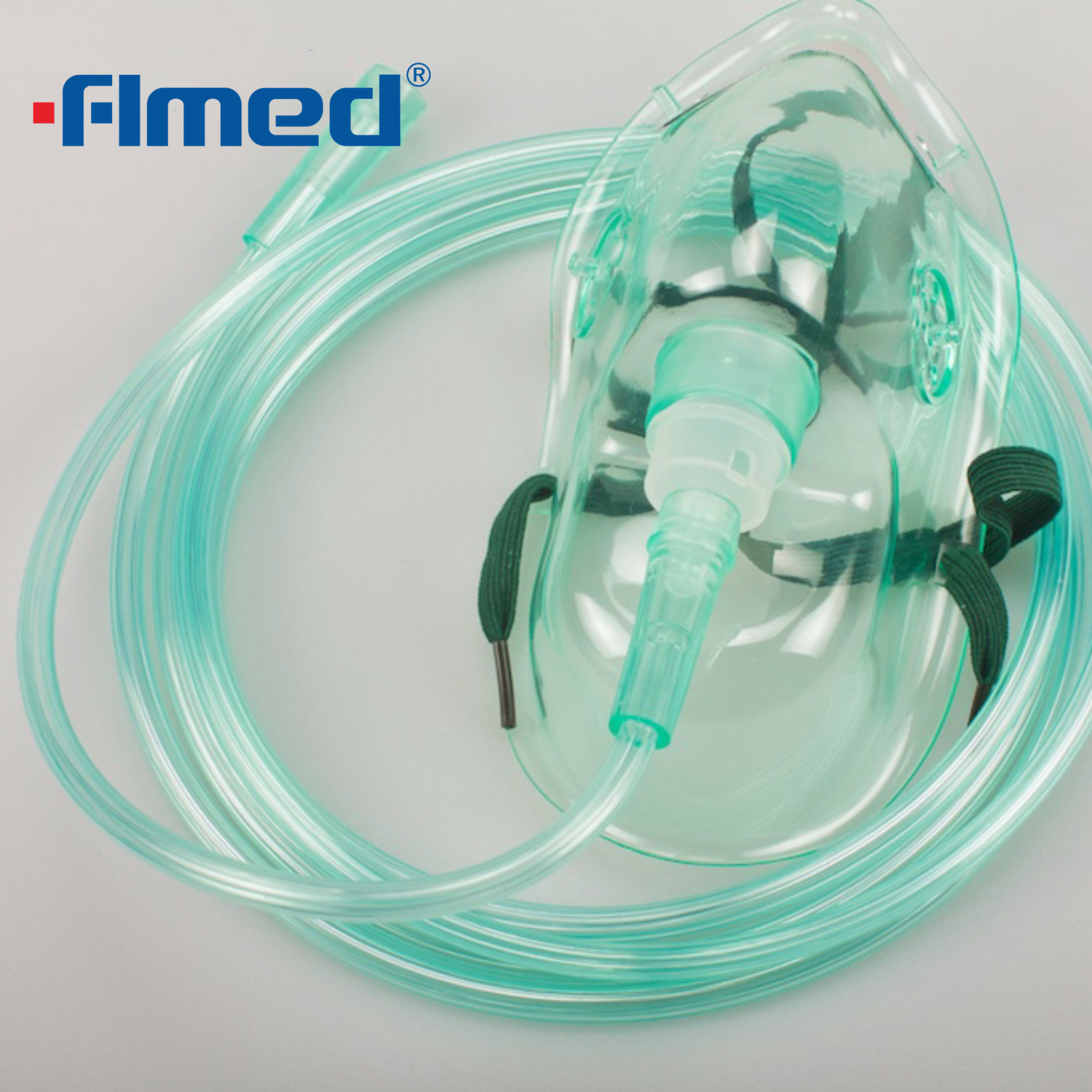
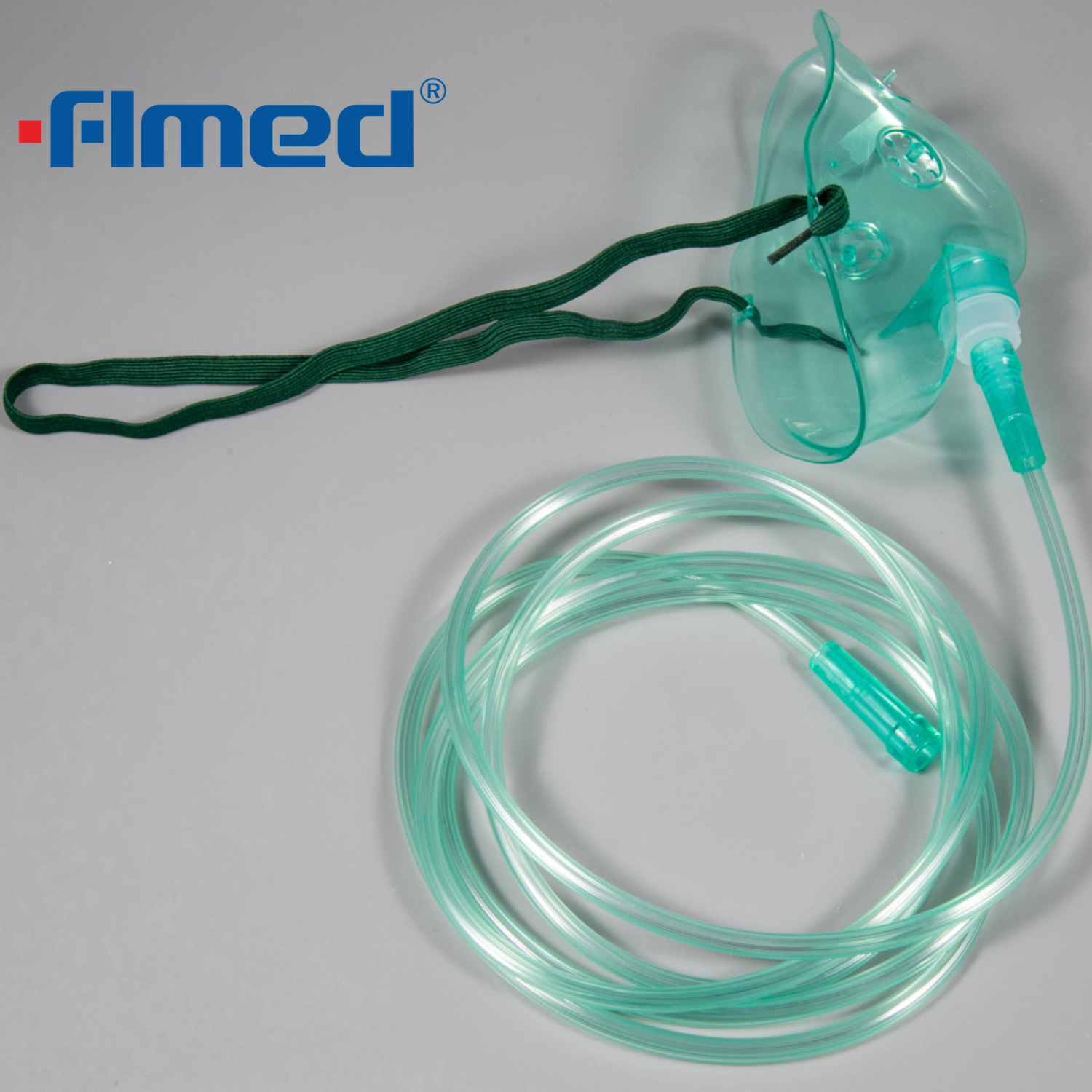
This familiar device provides essential baseline respiratory support across hospital wards. It operates safely between 5 and 10 L/min. It typically delivers 35 to 50% FiO2. Nurses routinely deploy them for short-term medical therapies. They work exceedingly well for post-operative recovery units. They also resolve mild medical emergencies quickly. However, they carry distinct, frustrating limitations for the wearer. They heavily interfere when patients attempt to eat or speak. Many individuals also experience intense claustrophobia risks during prolonged medical use. Moisture often builds up uncomfortably inside the plastic dome.
Venturi Mask (Air Entrainment Mask)
Venturi systems provide exact medical control utilizing the Bernoulli principle. They operate efficiently between 4 and 12 L/min. They deliver a highly precise 24 to 60% FiO2. You will use them primarily for Chronic Obstructive Pulmonary Disease (COPD) management. Preventing hypercapnia remains absolutely critical for this demographic. These entrainment devices ensure you never accidentally suppress a COPD patient's fragile hypoxic drive. They utilize interchangeable color-coded valves to dictate exact oxygen mixtures.
Non-Rebreather (NRB) and Partial Rebreather Masks
These robust systems handle severe, life-threatening medical emergencies. They require aggressive flow rates exceeding 10 to 15 L/min. They reliably deliver between 60 and 90% FiO2. Providers use them for severe hypoxemia, physical trauma, or acute carbon monoxide poisoning. They also serve incredibly well during immediate pre-intubation procedures. They feature an attached reservoir bag and specific one-way rubber valves. These valves prevent exhaled gases from re-entering the holding bag. Limitations remain extremely strict. Continuous clinical monitoring is legally required. You should never use them for standard, unmonitored general ward use. Implementing an advanced Oxygen mask of this caliber always demands proper professional training.
Open Oxygen Masks
Modern hospital systems increasingly adopt open physical designs. They uniquely support a broad flow range of 1 to 15 L/min. They effectively deliver anywhere from 24 to 90% FiO2. They serve as a highly versatile, modern alternative. They intentionally vent toxic CO2 efficiently through large open ports. They function successfully as a single-device solution for widely varying acuity levels. This smart design greatly reduces overall inventory complexity. Patients appreciate them because they allow clear conversation and unhindered drinking through a straw.
![oxygen mask]()
Nasal Cannula vs. Oxygen Mask: When to Escalate Delivery
Evaluating standard baseline therapy against escalated mask therapy requires clear clinical guidelines. You must know exactly when to transition a suffering patient. Waiting too long invites dangerous hypoxemia.
Limitations of Nasal Cannulas
Cannulas serve as excellent, comfortable frontline tools. However, they fail rapidly under specific physiological conditions. Caregivers must recognize these fail states instantly.
They remain completely ineffective for persistent mouth-breathers.
Patients experiencing severe nasal blockages receive poor, inadequate therapy.
Individuals suffering from heavily deviated septums cannot utilize them effectively.
Flow rates exceeding 4 to 6 L/min cause severe mucosal drying.
This mucosal drying leads directly to intense patient discomfort. It often causes painful nosebleeds and dangerous sinus infections. Adding bubble humidifiers helps marginally, but it does not solve the fundamental flow limitation.
Triggers for Mask Transition
You must implement detailed, written clinical escalation protocols. Transitioning your patient depends entirely on specific SpO2 failures. If a patient fails to maintain adequate saturation on room air or a standard cannula, you must escalate immediately. Do not hesitate when clinical signs point to respiratory distress. Watch for increased work of breathing or sudden tachypnea.
Quality of life considerations often clash directly against medical necessity. Facial devices inherently restrict speaking and eating. However, they become entirely mandatory when higher FiO2 is clinically required. You must prioritize physiological stability over temporary bedside discomfort. Clear communication helps patients tolerate the transition much better.
Critical Safety Risks and Clinical Implementation Guardrails
Improper equipment usage introduces severe, immediate operational risks. We must address patient safety directly and transparently. Eliminating clinical marketing fluff ensures better, safer daily care.
CO2 Retention Risks
Running certain equipment at poorly managed low flows causes immediate danger. Simple face devices operated below 5 L/min create a dangerous physical dead space. Exhaled carbon dioxide quickly accumulates within this confined plastic area. The patient then continuously rebreathes this toxic gas. This mechanism rapidly induces severe hypercapnia. You must always maintain adequate flushing flows. If a patient only needs 2 L/min, you must step them down to a nasal cannula immediately. Never leave a simple dome running at 2 L/min.
Suffocation Hazards in Reservoir Systems
Reservoir systems present distinct physiological dangers requiring intense vigilance. A deflated Non-Rebreather bag indicates a severe medical emergency. If the bag fully deflates during inspiration, the patient cannot inhale enough fresh gas. This scenario creates an immediate, terrifying suffocation risk. Continuous respiratory therapist (RT) or registered nurse monitoring remains legally and medically required. Never leave a vulnerable patient unattended while they use an active NRB system. Gas supply lines can kink easily. Wall regulators can fail unexpectedly.
Target SpO2 Discrepancies
Over-oxygenating specific patient demographics carries extreme medical risk. You must actively match therapy to established clinical baselines. Healthy adults typically require target SpO2 levels between 92 and 98%. However, COPD patients follow entirely different, strict limits. They usually require target ranges securely between 88 and 92%. Exceeding this range actively suppresses their unique hypoxic drive. This dangerous suppression halts their automatic breathing reflex entirely.
Below is a quick reference chart outlining standard clinical targets.
| Chart: Target SpO2 Levels by Patient Demographic |
| Patient Profile | Acceptable SpO2 Range | Clinical Escalation Trigger |
| Healthy Adult (Acute Illness) | 92% – 98% | Drops below 92% on current device |
| COPD / Chronic Respiratory Failure | 88% – 92% | Drops below 88% or exceeds 92% heavily |
| Severe Trauma / Carbon Monoxide | 100% (Short term goal) | Inadequate perfusion signs regardless of SpO2 |
Procurement Strategy: Scalability, Inventory, and Standardization
Healthcare administrators and clinical buyers face constant, demanding logistical challenges. Evaluating respiratory inventory requires incredibly clear operational logic. You must balance daily clinical utility against broad operational scalability. Simplifying your supply chain dramatically improves bedside efficiency.
SKU Consolidation (Cost & Scalability)
Stocking multiple distinct device types creates a massive logistical burden. Hospitals traditionally stock simple, Venturi, and NRB variants simultaneously. They must purchase these in distinct pediatric, adult, and elongated sizes. Managing these endless SKUs clutters supply rooms and crash carts. Evaluating "one-mask-serves-all" open models provides immense operational relief. These unified models typically reduce physical storage overhead by up to 20 to 30%. They simplify supply chain demands immediately. Procurement teams experience far fewer backorder headaches. Utilizing a highly adaptable Oxygen mask minimizes the frantic search for specialty items during emergencies.
Reducing Clinical Errors
Minimizing physical device changeouts directly reduces terrifying clinical errors. Transitioning a recovering patient from an NRB down to a simple model introduces vulnerability. Caregivers might easily input incorrect flow titrations during the hectic swap. Consolidated, variable-flow devices require only dial adjustments on the wall meter. This single-device approach practically eliminates dangerous switching errors. It ensures continuous therapy without removing the interface from the patient's face. Better continuity equals safer patient outcomes.
Next Steps for Buyers
Procurement teams must take immediate, actionable steps to modernize their inventory.
Conduct a thorough, ward-by-ward clinical needs assessment to identify heavy usage areas.
Evaluate specialized vendor supply chains for long-term consistency and reliable shipping.
Audit internal adverse events linked directly to equipment switching or incorrect flow settings.
Factor in mandatory respiratory therapist training times before adopting completely new structural designs.
Proper planning ensures smooth rollouts. Engaging bedside staff during the evaluation phase guarantees much higher adoption rates.
Conclusion
Choosing the correct equipment fundamentally requires precise clinical alignment. You must strictly align physiological needs like FiO2 and flow rates alongside vital patient safety constraints. Evaluating these crucial devices goes far beyond simple purchasing routines. It directly dictates daily patient outcomes and long-term recovery metrics. Ignoring essential limitations invites hypercapnia or suffocation risks.
We actively encourage clinical procurement teams to comprehensively audit their current respiratory delivery protocols. Assess any past adverse events linked to risky device switching. Consider adopting modern multi-acuity devices to heavily streamline bedside care. Implementing these straightforward steps guarantees much safer, scalable medical environments for everyone involved.
FAQ
Q: Can a non-rebreather mask provide 100% oxygen?
A: Practically, it provides around 80 to 90% FiO2. Imperfect face seals always allow room air to mix slightly during deep inhalation. Technically, manufacturers rate them to deliver up to 100% only under absolutely perfect, airtight clinical conditions.
Q: Why is 5 L/min the minimum flow rate for a simple face mask?
A: This specific flow rate actively flushes exhaled carbon dioxide out of the device casing. Running flows below 5 L/min creates a dangerous dead space. Patients will rapidly rebreathe toxic CO2, leading directly to dangerous hypercapnia.
Q: How often should an oxygen mask be replaced?
A: Standard infection control guidance dictates distinct replacement timelines. Home users typically replace them every two to four weeks. Hospitals strictly follow single-patient-use protocols. You should discard and replace them immediately if they become visibly soiled or physically damaged.
Q: Can patients sleep with an oxygen mask on?
A: Patients can sleep securely while wearing them. However, they present distinct slip risks and potential facial discomfort. Continuous clinical monitoring remains absolutely essential in hospitals. For home use, properly fitted CPAP or BiPAP setups often provide safer, more reliable overnight respiratory support.

 English