Introduction
Elderly patients face unique vulnerabilities upon hospital admission. Acute medical conditions are just the beginning. The natural aging process brings secondary, often overlooked challenges. The extreme fragility of aging skin and the cognitive confusion triggered by high-stress clinical environments demand specialized attention. In these critical situations, even minor details of patient care drastically impact recovery trajectories.
A standard rigid ID Wristband causes significant physical distress for a geriatric patient. Stiff identification bands with sharp machine-cut edges create constant irritating friction. For a patient experiencing delirium or dementia, this persistent discomfort inevitably leads to aggressive attempts to tear the band off. The resulting cascade of issues is severe. Lost identification triggers dangerous medical errors, while the physical struggle damages the patient's delicate wrist tissue.
Comfort is not a luxury on elderly wards. It dictates compliance and forms a fundamental component of patient safety. By carefully selecting ultra-soft materials, appropriate fastening mechanisms, and reliable data display methods, healthcare facilities completely transform the patient experience. This engineering and procurement guide explores exactly why medical facilities must prioritize ergonomic comfort alongside clinical efficacy.
Key Takeaways
Comfort Equals Compliance: A soft seamlessly contoured identification band significantly reduces the likelihood of elderly patients attempting removal, ensuring continuous safety.
Protecting Fragile Skin: Selecting hypoallergenic medical-grade PVC or vinyl is absolutely essential to prevent severe bruising and skin tears.
Security Meets Gentleness: Choosing the optimal fastening mechanism keeps the band securely attached without digging into delicate wrist tissue during sleep.
Accurate Information is Vital: Combining high-contrast digital scanning with manual alert systems guarantees medical staff have immediate access to crucial patient data.
Why the Right Identification Band is Critical in Elderly Care
The Intersection of Patient Safety and Comfort
In any modern hospital setting, an identification band accurately links a patient to their electronic medical record. This link ensures treatments, medications, and dietary plans are administered flawlessly. However, on an elderly ward, physical comfort and clinical safety are deeply intertwined. Imagine a memory care unit at 2 AM. An elderly patient experiencing sundowning syndrome becomes suddenly agitated. A stiff plastic band with sharp edges becomes the immediate focal point of their distress. They scratch and pull until the band snaps. Once the band is gone, the patient becomes a critical safety risk, completely undermining hospital verification protocols.
Industry Trends and the Risks of Poor Identification
The risks associated with patient misidentification multiply exponentially in geriatric care. Elderly patients often present with complex comorbidities requiring multiple high-alert medications with strict overlapping dosing schedules. A lost or illegible band acts as the primary catalyst for severe adverse events. These include medication mix-ups, incorrect dietary provisions leading to choking, and dangerous wandering.
Looking at recent clinical supply chain data, there is a definitive industry shift in geriatric care consumables. Hospital administrators and procurement teams recognize that non-clinical factors directly correlate with clinical outcomes. Current healthcare trends show a rapid move away from traditional rigid plastics toward elastomeric skin-friendly blends. This industry-wide pivot proactively combats elopement and medication errors in senior units. A durable comfortable wristband serves as the hospital's first line of defense against preventable errors.
![ID Wristband Comfort on Elderly Wards]()
The Hidden Danger: Skin Irritation and Aging Skin
Understanding Epidermal Thinning in Seniors
As the human body ages, the integumentary system undergoes drastic physiological changes. The epidermis thins significantly. It loses natural elasticity, moisture retention capabilities, and the protective cushioning of subcutaneous fat. This condition is clinically known as paper skin. It makes the elderly highly susceptible to mechanical injuries. Standard plastic wristbands are incredibly hazardous to this demographic. Continuous unforgiving friction from a rigid band against thinning skin quickly results in painful micro-abrasions and deep bruising.
Preventing Skin Tears and Abrasions
To proactively address these dermatological vulnerabilities, hospitals must invest in premium identification solutions engineered explicitly to prevent Skin Irritation. Modern medical bands designed for geriatric use feature ultra-soft rolled edges that glide smoothly over the skin. Building on this clinical requirement, manufacturers utilize breathable moisture-wicking polymers to prevent sweat accumulation. Trapped moisture rapidly macerates fragile skin and accelerates tissue breakdown. Advanced models incorporate antimicrobial properties to protect delicate wrists from secondary bacterial infections during extended hospitalizations.
Evaluating the Best Fastening Mechanism for Senior Patients
Adhesive vs. Snap Closures: An Engineering Comparison
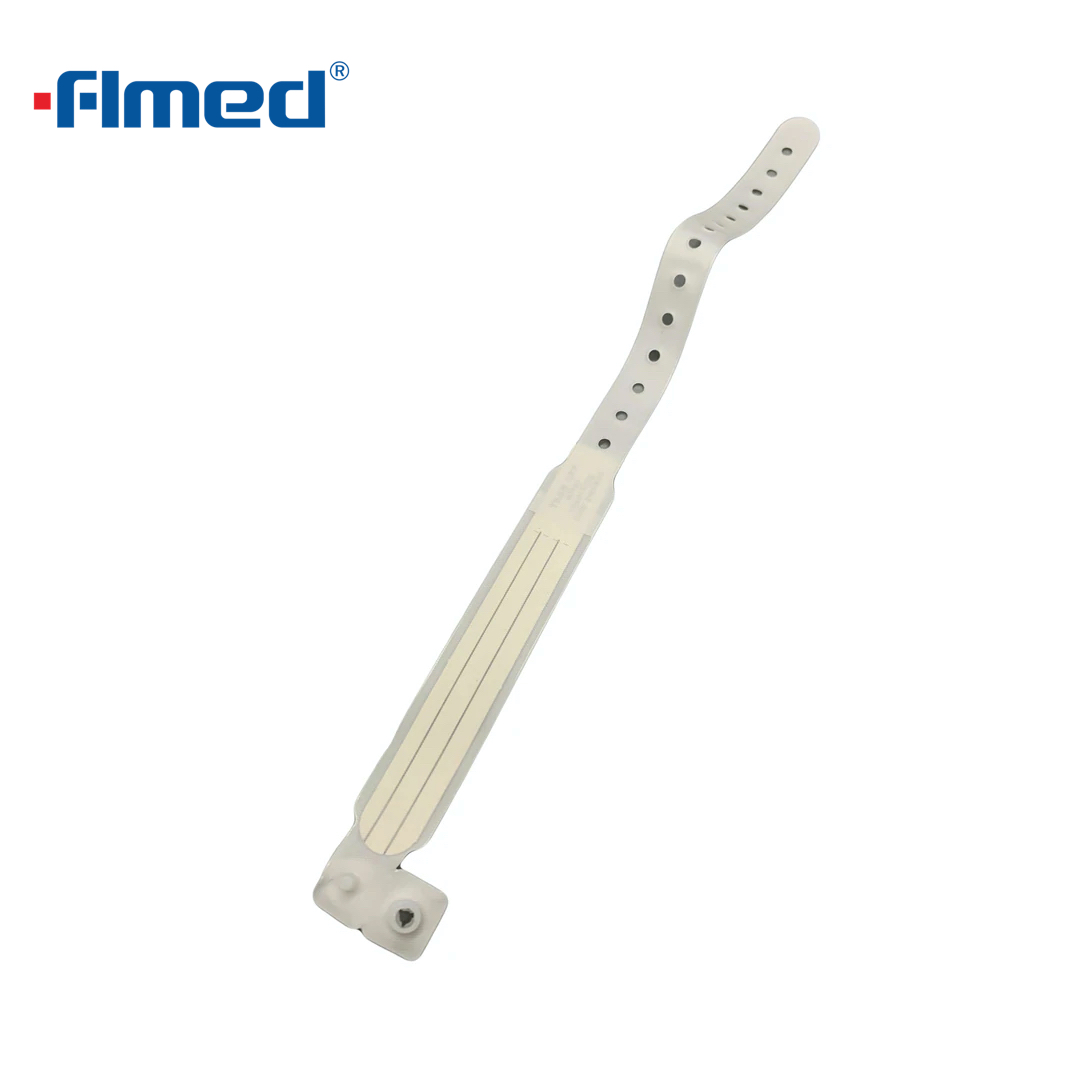
Beyond the material composition, the fastening mechanism plays a pivotal role in dictating patient comfort and overall security. When evaluating the optimal Closure Type, hospital procurement teams must weigh high-grade adhesive seals against mechanical snap closures. Snap closures offer exceptional tamper-evident security. This makes them ideal for patients with severe dementia who might confusedly try to rip off their bands. Conversely, advanced adhesive closures offer a completely flat contoured fit. This low-profile design is far less obtrusive, drastically reducing the risk of a bulky plastic snap pressing painfully into the wrist of a bedridden patient.
To simplify the procurement decision, consider the following clinical comparison:
| Feature |
Tamper-Evident Snap Closure |
Medical-Grade Adhesive Closure |
| Security Level |
Maximum security. Destroys the band upon forced removal. |
High security. Provides a strong water-resistant seal. |
| Geriatric Comfort |
Moderate. The plastic stud can cause pressure points if positioned poorly. |
Excellent. Lays completely flat against the wrist. |
| Ideal Clinical Scenario |
Memory care wards, severe dementia, high elopement risk. |
Palliative care, frail or bedridden patients, sensitive skin. |
Balancing Security with Easy Removal for Nurses
From an operational standpoint, the chosen fastening system must strike a practical balance. It must be robust enough to keep the patient safe from accidental removal yet intuitively designed for nursing workflows. High-quality closures feature designated cutting zones. This design allows nurses to easily slip medical safety scissors under the band without pinching the patient's underlying skin when discharge or swelling necessitates a replacement.
Data Accuracy: Digital Integration vs. Manual Redundancy
The Role of Digital Scanning in Preventing Medication Errors
Technological integration is vital for error-free clinical workflows. High-resolution Barcode Printing allows for seamless instantaneous scanning by nursing staff before administering any medication. This electronic verification process cross-references the hospital central database. It ensures the right patient receives the right medication in the correct dosage at the exact right time. Relying on scannable smudge-proof barcodes minimizes human error on busy high-stress geriatric wards.
When to Utilize Manual Documentation for Immediate Updates
While digital solutions represent the gold standard, manual documentation remains a critical life-saving backup. Patient statuses on elderly wards change in a matter of minutes. A highly visible Write-on Surface is indispensable in fast-paced environments. Nurses need a reliable coated area on the band to instantly jot down sudden visual alerts with a medical marker. Whether noting a newly discovered drug allergy or an immediate fall-risk designation, this manual redundancy bridges the dangerous time gap before admissions can generate a newly printed barcode.
Key Features of a High-Quality Elderly Ward Identification Band
Soft Hypoallergenic Material Specifications
The foundational element of any geriatric wristband is its chemical and physical composition. Industry standards dictate the use of latex-free soft-touch PVC or specialized medical-grade vinyl. These materials are inherently hypoallergenic and chemically formulated to prevent allergic contact dermatitis. Standard adult sizing typically measures around 250mm by 25mm, providing ample room for adjustment. The soft-touch finish ensures the band flexes fluidly with patient movements to eliminate rigid resistance.
Water-Resistance for Bathing and Hygiene
Elderly patients frequently require comprehensive nursing assistance with daily hygiene. This includes bed sponge baths, showering, and frequent sanitization. Therefore, the identification band must maintain absolute structural integrity when exposed to warm water and harsh medical-grade soaps. The thermal ink used for scanning and the marker ink used for handwritten alerts must be entirely waterproof. A faded smeared or peeling wristband is clinically useless and requires immediate replacement.
Durability Over Long-Term Admissions
Geriatric patients generally experience much longer hospital admission periods compared to younger demographics. Consequently, their identification must be engineered for serious longevity. It must maintain its soft texture, structural security, and data legibility over weeks of continuous wear. Superior products resist the stretching and degradation typically caused by fluctuating body heat, ambient moisture, and continuous friction against bed linens.
How to Choose the Right Supplier for Your Facility
Assessing Compliance and Engineering Standards
When hospital procurement managers select a supplier, rigorous due diligence is non-negotiable. Facilities should prioritize manufacturing partners holding recognized ISO 13485 certifications and complying with strict regional medical device standards. Examining clinical case studies and requesting tactile samples validates a supplier's claims regarding comfort and reliability. Reputable suppliers prioritize non-toxic environmentally safe manufacturing processes alongside patient safety.
Exploring Top-Tier Options for Your Ward
Partnering with a reliable vendor specializing explicitly in medical-grade identification solutions is the most effective way to upgrade ward safety protocols. Procurement teams must seek manufacturers who deeply understand the nuanced specialized needs of geriatric care. Investing in premium customizable identification infrastructure drastically reduces hidden operational costs associated with treating friction injuries and replacing failed bands.
Implementing New Identification Protocols on the Ward
Staff Training on Proper Application
Procuring the best physical product is only half the solution. Proper clinical application is equally vital. Nursing staff must receive targeted hands-on training on applying these bands correctly to frail wrists. A standard and highly effective clinical practice is the one-finger rule. This protocol requires staff to leave exactly enough space for one index finger to slide smoothly between the band and the patient's skin. This ensures the fastening mechanism is secure enough to prevent slipping but loose enough to avoid restricting blood flow.
Routine Checks for Fit and Comfort
Ward managers should implement strict standardized protocols requiring daily skin assessments around the identification band. During routine morning care or scheduled medication administration, nurses should briefly inspect the wrist. This catches any early microscopic signs of redness or irritation. Furthermore, these routine visual checks ensure the printed barcode remains flat, unwrinkled, and perfectly scannable for the electronic health record system.
Conclusion
An identification band is far more than an administrative label. It is a vital frontline piece of medical equipment. For elderly patients navigating the complexities of a hospital stay, physical comfort dictates overall safety and well-being. Rigid sharp plastics cause pain, leading to patient tampering and catastrophic identification failures.
By prioritizing ergonomic design, hospitals eliminate these risks. Features like a secure yet gentle closure, reliable digital printing, a clear area for manual alerts, and ultra-soft materials collectively safeguard vulnerable patients. Hospital administrators, ward managers, and procurement officers must actively audit current supplies. Upgrading to patient-centric comfortable identification solutions is a necessary investment. Ready to elevate your ward's standard of care? Explore the professional range of medical identification products at Forlong Medical to find the exact specifications your facility requires to keep senior patients safe, secure, and properly identified.
FAQ
What is the best material for an elderly patient's identification wristband?
The ideal material is a soft latex-free hypoallergenic PVC or a specialized medical-grade vinyl composite. These advanced materials are specifically designed to be highly breathable, flexible, and exceptionally gentle. This engineering significantly reduces the risk of friction injuries, bruising, and allergic reactions on thin aging skin.
Why is the fastening mechanism so important for geriatric patients?
The fastening mechanism determines both physical security and overall ergonomic comfort. A highly secure tamper-evident snap prevents confused patients from removing their bands. Simultaneously, a well-designed adhesive closure ensures the plastic edges remain completely flat and do not dig painfully into the wrist when the patient rests.
Can an identification wristband feature both digital scanning and manual writing areas?
Yes. The most versatile clinical models feature a highly efficient hybrid design. They include a bright flat area dedicated to high-contrast thermal printing to facilitate seamless electronic health record integration. Alongside this, they feature a dedicated smudge-proof surface for nurses to quickly jot down immediate temporary visual alerts like sudden fall risks.
How often should elderly patient ID wristbands be replaced?
While high-quality medical bands are designed to last for weeks, they should be replaced immediately if the barcode becomes unscannable, the written text fades, or the patient exhibits any signs of skin maceration or allergic reaction beneath the band. Routine daily checks by nursing staff dictate the exact replacement schedule based on individual patient hygiene and swelling.
Are RFID wristbands better than barcodes for dementia patients?
RFID technology offers significant advantages for memory care wards specifically regarding elopement risks. RFID bands can trigger ward alarms if a confused patient wanders near an exit. However, barcode bands remain the global gold standard for medication administration accuracy at the bedside. Many modern facilities now utilize hybrid bands containing both an RFID chip for location tracking and a printed barcode for clinical scanning.
How can hospital staff actively prevent skin irritation from these bands?
Hospitals prevent irritation by first procuring premium bands manufactured with smooth rounded edges rather than sharp machine cuts. Clinically, nursing staff must apply them with a comfortable amount of slack utilizing the standard one-finger rule. Finally, staff should conduct routine daily skin checks under the band during regular patient care to catch any early signs of redness.
Are comfortable soft wristbands durable enough to last through long hospital stays?
Absolutely. Premium medical bands are engineered by specialists to be both exceptionally soft and incredibly durable. They are fully water-resistant to withstand regular bed bathing, showering, and frequent hand washing. This robust engineering ensures both the structural integrity of the band and the printed clinical data remain intact and highly legible for the duration of the admission.

 English