Material purity and fluid retention form the operational backbone of clinical healthcare settings and high-performance consumer textiles. Raw cotton naturally repels water due to inherent waxes and oils. Transforming this raw agricultural product into a highly functional material requires rigorous purification. Procurement officers and product engineers face a persistent challenge. You must select the exact grade of cotton that meets stringent safety and performance standards without overspending on unnecessary specifications. Understanding the specific uses of Absorbent Cotton requires a technical framework. You must evaluate medical versus commercial grades accurately to mitigate supply chain risks during vendor selection. This guide details the mechanical properties, grading criteria, and application-specific requirements necessary to make informed procurement decisions. You will learn how to match fiber characteristics to your end-product needs, ensuring compliance, safety, and optimal fluid management.
- Application-Specific Grading: The end-use—whether surgical dressings or consumer apparel—dictates the required purity, fiber length, and absorbency rate.
- Regulatory Compliance: Medical absorbent cotton must adhere to strict pharmacopeia standards (e.g., USP, EP) for sterility, bioburden, and chemical residue.
- Performance Metrics: True evaluation relies on quantifiable metrics such as fluid retention capacity, wicking speed, and mechanical protection capabilities.
- Risk Mitigation: Vendor selection must prioritize lot-to-lot consistency and transparent impurity-removal processes to prevent downstream contamination or product failure.
What Defines High-Grade Absorbent Cotton?
Separating raw cotton from highly processed variants requires establishing strict baseline criteria. Raw fibers possess a hydrophobic layer designed by nature to protect the seed. High-grade materials undergo extensive processing to strip away these barriers. This results in a product engineered specifically for moisture management and structural integrity. You cannot simply take field cotton and use it in a clinical setting. The raw material contains dust, plant matter, and natural oils that actively repel water. We measure the quality of the final product by how effectively the manufacturer removes these contaminants without damaging the underlying cellulose structure.
The grading process looks at the physical properties of the fiber after treatment. Evaluators check for staple length, micronaire value, and the presence of neps. Neps are small, tangled knots of fiber that form during mechanical processing. High-grade materials minimize neps to ensure a smooth, uniform texture. This uniformity directly impacts how the material performs when spun into yarn or formed into non-woven pads. When you source materials for sensitive applications, you must verify that the physical structure of the fiber remains intact after the harsh chemical treatments required for purification.
The Purification Process: From Raw Fiber to Functional Material
The transformation begins with mechanical and chemical processes designed to remove natural waxes, oils, pectin, and coloring matter. Raw fibers enter a scouring phase where alkaline solutions break down the hydrophobic barriers. This step transitions the material from water-repellent to highly hydrophilic. Facilities typically use large pressurized vessels called kiers for this boiling process. The cotton boils in a sodium hydroxide solution under pressure for several hours. This saponifies the natural waxes, turning them into water-soluble soaps that wash away easily.
Following scouring, the bleaching process achieves superior whiteness and removes any remaining impurities. Modern facilities utilize advanced bleaching agents, primarily hydrogen peroxide, to maximize hydrophilicity while maintaining fiber strength. Older methods used chlorine gas or sodium hypochlorite, but these left behind toxic dioxins. Hydrogen peroxide breaks down into water and oxygen, leaving no harmful chemical residues. Proper purification ensures the material absorbs liquids rapidly. The manufacturer must carefully control the pH and temperature during bleaching. If the temperature gets too high, the cellulose degrades, resulting in weak fibers that shed lint easily.
After bleaching, the cotton undergoes thorough washing to neutralize any remaining chemicals. It then passes through heavy squeeze rollers to remove excess water before entering large industrial dryers. The drying process must be uniform to prevent the fibers from becoming brittle. Finally, the material passes through a carding machine. Carding uses wire-covered cylinders to separate, align, and clean the fibers one last time. This produces a continuous web of parallel fibers, ready for packaging or further processing into specific medical or consumer products.
Key Performance Indicators (KPIs) in Cotton Evaluation
Evaluating quality requires measuring specific performance indicators. Fluid retention capacity stands as the primary metric. It measures the exact volume of liquid held per gram of fiber. High-capacity materials reduce the frequency of dressing changes in clinical environments. They also improve comfort in consumer products. To test this, technicians weigh a dry sample, submerge it in water, let it drain for a specific period, and weigh it again. The difference indicates the retention capacity. You want a material that holds multiple times its own weight in fluid without dripping.
Wicking speed and capillary moisture distribution dictate how fast the material draws moisture away from a surface. Rapid wicking prevents pooling and keeps the contact area dry. This is tested by suspending a strip of the material in a colored liquid and measuring how high the liquid travels up the strip within a set timeframe. Fast wicking is essential for products like surgical sponges that need to clear blood rapidly from an operating site. It relies on the microscopic spaces between the fibers acting as capillary tubes.
Fiber integrity and tensile strength remain vital. Minimizing linting or shedding prevents foreign body contamination in sensitive surgical environments. It also ensures durability in textile applications. Tensile strength is measured by pulling a bundle of fibers until they break. The force required indicates the strength. Linting is evaluated by shaking or rubbing the material over a dark surface and counting the particles that fall off. In an operating room, loose lint can carry bacteria into an open wound, causing severe postoperative complications. Therefore, low-linting characteristics are non-negotiable for surgical grades.
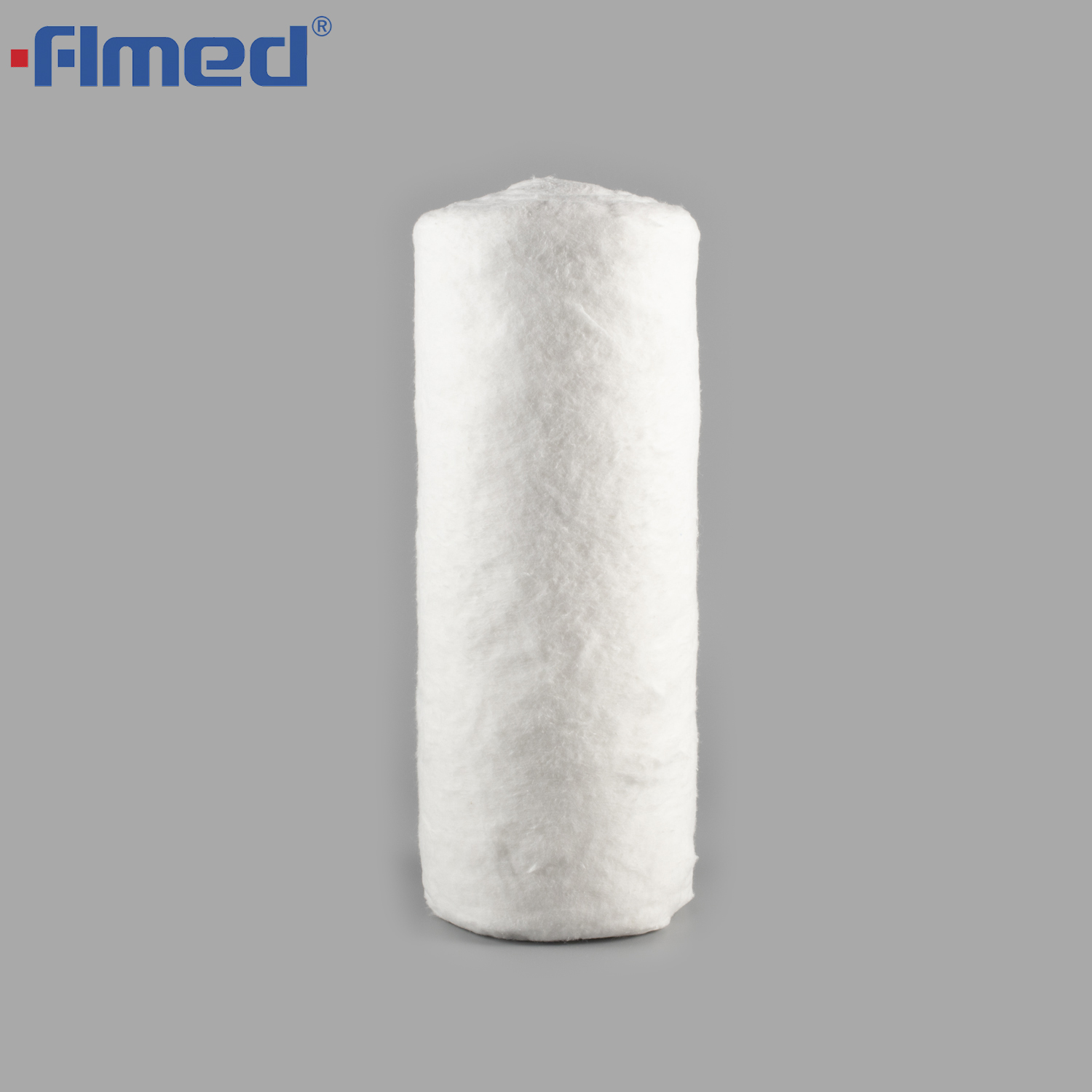
![Absorbent Cotton Roll]()
Primary Applications of Medical Absorbent Cotton
Healthcare, surgical, and clinical environments rely heavily on specific solutions tailored for patient safety and infection control. The deployment of medical absorbent cotton spans multiple critical care categories. These applications demand rigorous adherence to sterility and performance standards. You will find this material in almost every department of a hospital, from the emergency room to the maternity ward. Its versatility stems from its ability to be formed into various shapes and densities while maintaining its core absorptive properties.
Surgical and Wound Care Dressings
Manufacturers utilize purified fibers to produce essential medical supplies such as gauze, bandages, and surgical sponges. These products provide vital mechanical protection. They absorb blood, mucus, and pus efficiently while shielding vulnerable wounds from bacterial infection. Surgical sponges, often called laparotomy sponges, are used internally during major surgeries. They must absorb massive amounts of fluid quickly to keep the surgeon's field of vision clear. These sponges often incorporate a radiopaque thread. If a sponge is accidentally left inside a patient, an X-ray will easily detect it.
Wound cleaning and debridement represent another critical application. Medical professionals utilize sterile materials to clear debris, exudates, and topical contamination from wound beds prior to dressing application. The soft texture prevents additional tissue trauma during the cleaning process. When treating severe burns or chronic ulcers, the tissue is extremely fragile. Using a harsh material for cleaning can strip away newly formed cells and delay healing. Purified cotton provides the necessary friction to remove dead tissue without damaging the healthy granulation tissue underneath.
The manufacturing of these dressings requires strict environmental controls. The facilities must operate cleanrooms to prevent airborne particles from contaminating the products before packaging. The final products are usually packaged in peel-pouches made of medical-grade paper and plastic film. This packaging allows sterilizing gases, like ethylene oxide, to penetrate and kill any microorganisms while maintaining a sterile barrier until the package is opened in the clinical setting.
Fluid Management and Exudate Control
Absorbent pads are routinely deployed for covering surgical incisions, severe cuts, and burns. These pads manage heavy exudate, drawing moisture away from the injury site. Keeping the wound area dry prevents skin maceration and maintains an optimal microenvironment for cellular repair. Maceration occurs when skin is exposed to moisture for too long, causing it to soften, turn white, and break down. This creates a new entry point for bacteria. High-capacity pads pull the fluid into their core, locking it away from the skin surface.
Enhancing patient comfort and recovery depends heavily on material properties. Fiber softness, thermal regulation, and non-adherent surfaces directly impact patient outcomes. High-quality materials reduce friction and irritation, allowing patients to heal with minimal discomfort. Many modern wound pads feature a non-adherent contact layer. This thin, porous film prevents the cotton fibers from sticking to the drying wound exudate. When the nurse removes the dressing, it comes off cleanly without tearing the healing tissue or causing pain to the patient.
In cases of heavy trauma, specialized trauma dressings combine multiple layers of absorbent material. They feature a soft inner layer for immediate wicking, a thick central core for maximum retention, and a fluid-resistant outer layer to prevent strike-through. Strike-through happens when blood or exudate soaks completely through the dressing to the outside. This exposes the clinical staff to potential bloodborne pathogens and requires an immediate dressing change. Properly engineered pads prevent this by utilizing the maximum retention capacity of the purified fibers.
Clinical Hygiene and Sterilization Prep
Secondary medical applications include diagnostic swabs, cosmetic prep use, and general clinical hygiene. Swabs require tightly spun fibers that hold their shape during specimen collection or antiseptic application. When a doctor takes a throat culture, the swab must collect enough biological material for testing without leaving fibers behind in the patient's throat. The manufacturing process for swabs involves spinning the fibers tightly around a wooden, plastic, or wire shaft. The fibers must adhere securely to the shaft to prevent detachment during use.
The material must maintain structural integrity when exposed to harsh substances. It frequently encounters antiseptics, alcohol, and rigorous autoclave sterilization protocols. Fibers must not degrade or release lint when saturated with cleaning agents like iodine or chlorhexidine. In dental clinics, small cylindrical rolls are used to pack the mouth and keep the working area dry. These rolls must absorb saliva continuously without losing their shape or breaking apart in the patient's mouth. They must also withstand the high heat and pressure of steam autoclaves used to sterilize dental instruments and supplies.
Commercial and Consumer Textile Applications
Beyond clinical settings, high absorbency serves as the primary success criterion for numerous commercial applications. Consumer markets leverage these purified fibers to create products focused on hygiene, comfort, and moisture control. The manufacturing standards for these products differ from medical grades, focusing more on high-volume production and cost-efficiency. However, the core requirement for rapid fluid uptake remains the same. Product engineers must carefully select the right fiber specifications to balance performance with manufacturing costs.
Reusable and Disposable Hygiene Products
Manufacturers integrate highly absorbent fibers into nappy inserts, reusable wipes, and feminine care products. These items require rapid fluid uptake and secure retention to prevent leaks and ensure user confidence. In disposable diapers, the cotton is often blended with superabsorbent polymers (SAP). The cotton provides the initial rapid wicking, drawing the fluid away from the skin quickly. The SAP then locks the fluid away in a gel form. This combination maximizes efficiency and keeps the user dry for extended periods.
Child-care and infant products demand exceptional safety profiles. High-frequency wash items such as baby bibs, burp-cloths, and sensitive-skin baby wipes rely on these fibers. Product engineers must evaluate the balance between moisture management and skin sensitivity. They ensure the final items possess hypoallergenic and dermatologically safe properties. Infant skin is significantly thinner and more permeable than adult skin. It reacts quickly to chemical residues or rough textures. Therefore, materials used in these products must undergo rigorous testing for pH balance and the absence of harsh bleaching agents.
Reusable hygiene products present a different set of engineering challenges. The material must withstand dozens or hundreds of washing and drying cycles without losing its absorptive capacity or structural integrity. Manufacturers often use longer staple fibers and tighter weaving or knitting techniques to enhance durability. They must also consider how the material reacts to standard laundry detergents and fabric softeners. Fabric softeners can coat the fibers with a hydrophobic layer, drastically reducing their absorbency over time. Care instructions must clearly advise against using these additives.
High-Absorbency Apparel and Bedding
Specialized sportswear, undergarments, and pet beds utilize absorbent fabrics to manage moisture effectively. These applications prioritize drawing sweat away from the body to keep the user dry and comfortable during physical exertion or rest. In athletic wear, the cotton is sometimes blended with synthetic fibers like polyester. The cotton absorbs the sweat, while the synthetic fibers provide stretch and durability. This creates a fabric that manages moisture while maintaining its shape during rigorous movement.
Specialized medical and domestic bedding also relies on these materials. Designing bedsheets, linens, and protective underpads requires fabrics that regulate microclimates and prevent sweat accumulation. The material manages moisture to enhance user comfort and provide crucial thermal regulation throughout the night. In hospital settings, bed-bound patients are at high risk for pressure ulcers. Moisture accumulation from sweat or incontinence exacerbates this risk. High-quality absorbent underpads draw moisture away from the patient's skin, reducing friction and shear forces that contribute to skin breakdown.
Evaluation Dimensions: Selecting the Right Cotton for Your Application
Buyers need a structured framework to assess specifications against their specific product requirements. Matching the right grade to the intended use prevents performance failures and optimizes procurement budgets. You cannot rely on generic descriptions like "high quality" or "super absorbent." You must demand specific technical data sheets from your suppliers. These sheets should detail the exact physical and chemical properties of the material, allowing you to make an objective comparison between different vendors.
Medical vs. Non-Medical Grades
Regulatory requirements for clinical use differ vastly from commercial textile standards. Clinical grades mandate strict bioburden limits, guaranteed sterility, and the complete absence of optical brighteners. Optical brighteners are chemicals added to make fabrics appear whiter under UV light. They can cause severe allergic reactions when placed inside a wound. Medical standards strictly prohibit their use. Commercial grades focus more on durability, visual appeal, and general absorbency. They may allow higher levels of impurities as long as they do not affect the final product's performance or safety.
Requiring ISO-certified or pharmacopeia-compliant materials carries significant cost implications. Procurement teams must weigh these costs against the regulatory demands of their end product. Over-specifying drives up expenses unnecessarily. You do not need USP-grade sterile cotton to manufacture standard household cleaning wipes. Conversely, under-specifying introduces severe compliance risks. Using commercial-grade material in a surgical sponge could lead to patient infections, massive product recalls, and devastating legal liabilities. You must align your material specifications exactly with the regulatory classification of your final product.
Features-to-Outcomes Mapping
Matching fiber characteristics to specific end-products ensures optimal performance. Short fibers work well for disposable swabs, while long, combed fibers provide the durability needed for surgical sponges. You must understand how the physical dimensions of the fiber translate into mechanical performance on the production line and in the hands of the end-user.
| Fiber Characteristic | Primary Metric | Ideal End-Product Application | Expected Outcome |
| Short Fiber Length (< 20mm) | High surface area per gram | Diagnostic Swabs, Cosmetic Pads | Rapid surface absorption, easy shaping |
| Long, Combed Fibers (> 28mm) | Tensile strength, low linting | Surgical Sponges, Gauze | Structural integrity during surgery, no debris |
| High Micronaire (Coarse) | Maximum fluid volume retention | Burn Dressings, Nappy Inserts | Heavy exudate control, leak prevention |
| Low Micronaire (Fine) | Softness, rapid wicking speed | Wound Cleaning, Baby Wipes | Reduced skin friction, immediate moisture uptake |
When evaluating these characteristics, you must also consider the manufacturing process. Short fibers are easier to form into dense, non-woven pads using hydroentanglement. This process uses high-pressure water jets to tangle the fibers together without using chemical binders. Long fibers are better suited for traditional spinning and weaving processes used to make gauze. The micronaire value, which measures the thickness of the individual fibers, dictates the final product's softness and loft. Coarse fibers create a bulky product with high void space for holding fluid. Fine fibers create a dense, soft product that wicks moisture rapidly.
Scalability and Supply Chain Reliability
Vendor capacity and lead times play a critical role in procurement. Suppliers must demonstrate the ability to maintain consistent quality across large-volume orders. Inconsistent purification processes lead to variations in absorbency and color. These variations can disrupt manufacturing lines and compromise final product quality. If a batch of material arrives with a higher moisture content than specified, it can cause jamming in carding machines or lead to mold growth during storage.
You must evaluate the supplier's raw material sourcing strategy. Do they rely on a single geographic region for their raw cotton? If so, a bad harvest or regional instability could disrupt your supply chain. The best suppliers source raw materials from multiple regions and blend them to achieve a consistent input profile. They also maintain robust internal quality control laboratories. They should test every batch of finished product before it leaves their facility and provide you with the corresponding data.
Cost-to-Value Trade-Offs and Implementation Risks
Analyzing financial and operational trade-offs ensures you secure the right material without compromising safety or budget. Procurement decisions directly influence both product efficacy and bottom-line profitability. You must look beyond the initial price per kilogram and consider the total impact of the material on your manufacturing efficiency and product failure rates.
Balancing Purity Requirements with Procurement Budgets
Financial risks arise from poor specification matching. Buying surgical-grade materials for standard apparel wastes capital on unnecessary sterilization and bioburden controls. You pay a premium for the extensive testing and cleanroom environments required to produce medical grades. If your product does not require that level of purity, you are throwing money away. You must conduct a thorough risk assessment of your final product to determine the minimum acceptable specifications.
Conversely, under-specifying materials for hygiene products risks severe compliance failures, potential recalls, and damage to brand reputation. If you purchase cheap material that has not been properly neutralized after bleaching, the residual chemicals can cause skin irritation in the end-users. This leads to customer complaints, negative reviews, and potential regulatory action. The cost of a single product recall far exceeds the savings gained by purchasing substandard raw materials. You must establish a firm baseline for quality and refuse to compromise on critical safety parameters.
Mitigating Contamination and Quality Control Risks
Implementation risks include lot-to-lot variance, residual chemical contamination from the bleaching process, and excessive linting. These issues compromise product safety, especially in wound care applications. Lot-to-lot variance means that one shipment performs perfectly, while the next shipment fails your internal quality checks. This inconsistency forces you to constantly adjust your manufacturing equipment, leading to downtime and wasted material.
Mitigation strategies require proactive vendor management. You must establish clear communication channels and set firm expectations from the beginning. Implement the following protocols to protect your production lines:
- Require Certificates of Analysis (CoA) for every shipment, detailing the exact test results for that specific batch.
- Conduct independent lab testing on random samples to verify fluid retention, pH levels, and chemical residue limits.
- Implement strict vendor auditing protocols, including annual site visits to inspect their purification facilities and quality control labs.
- Establish a quarantine procedure for incoming materials. Do not release them to the production floor until your internal quality team approves the CoA and initial inspection.
Conclusion
The utility of purified cotton depends entirely on matching the purification grade and mechanical properties to the specific risk profile of your end product. Filtering suppliers based on documented compliance, testing transparency, and historical lot consistency ensures reliable procurement. You must treat material sourcing as a critical engineering function, not just a purchasing task. To move forward effectively, take the following actions:
- Request material samples from multiple vendors to conduct in-house sink-time and fluid retention tests.
- Review third-party testing certificates to verify the absence of optical brighteners and chemical residues.
- Conduct small-batch prototyping to evaluate fiber integrity and linting levels under your specific manufacturing conditions.
- Establish clear, quantifiable KPIs in your vendor contracts regarding bioburden limits and wicking speeds.
FAQ
Q: What is the difference between standard cotton and absorbent cotton?
A: Standard raw cotton contains natural waxes, oils, and pectin that make the fiber water-repellent. The purified version undergoes scouring and bleaching processes to remove these hydrophobic impurities. This chemical and mechanical processing transforms the fibers, making them highly hydrophilic and capable of rapidly absorbing and retaining liquids.
Q: Is medical absorbent cotton always sterile?
A: No, it is not always sterile upon purchase. It is available in sterile-packaged formats ready for immediate clinical use, or as non-sterile bulk rolls. Non-sterile variants are typically purchased by manufacturers who will incorporate the material into devices or dressings and perform downstream sterilization before final packaging.
Q: How is the absorbency of cotton tested?
A: Absorbency is typically measured using standard sink-time tests, which time how long it takes for a specified weight of the material to submerge completely in water. Additionally, water retention capacity metrics are used to calculate the exact volume of liquid the fibers can hold per gram of material after saturation and draining.
Q: Can absorbent cotton be reused in medical settings?
A: In clinical and surgical environments, it is strictly designated for single-use to maintain infection control and prevent cross-contamination. However, in consumer textile applications like reusable diapers or high-absorbency apparel, the integrated fibers are designed to withstand multiple washing and drying cycles.
Q: What standards govern the quality of medical absorbent cotton?
A: Quality is governed by strict pharmacopeia standards, primarily the United States Pharmacopeia (USP) and the European Pharmacopoeia (EP). These standards dictate acceptable limits for bioburden, moisture content, and chemical residues. Additionally, relevant ISO standards for medical devices regulate the manufacturing and sterilization processes.
Q: Does the bleaching process affect the safety of the cotton?
A: The bleaching process is essential for purity, but improper methods can leave harmful residues. The industry has largely shifted toward chlorine-free bleaching methods, such as hydrogen peroxide bleaching, to eliminate the risk of dioxin contamination. Rigorous chemical residue testing ensures the final material is safe for prolonged skin contact and wound care.

 English