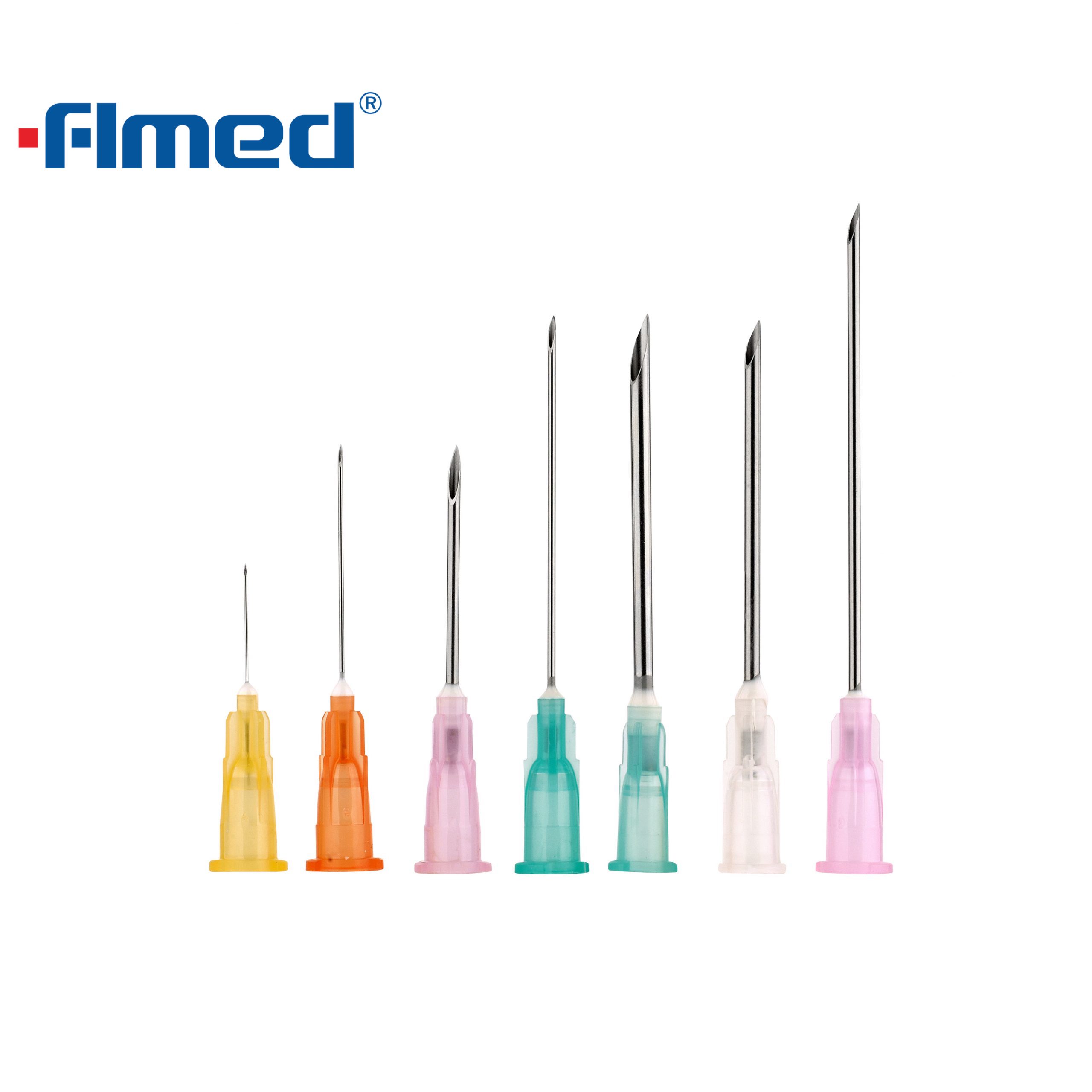
Healthcare professionals often choose an 18 gauge needle for a variety of medical procedures. The 18 gauge needle is ideal for drawing blood and is also commonly used for administering thick medications. Its larger size allows for rapid fluid delivery and makes it suitable for blood transfusions. The table below highlights the main uses of this gauge needle:
Needle Gauge | Common Uses |
|---|
18 Gauge | Administering thick medications, drawing blood, rapid fluid delivery, blood transfusions |
Selecting the appropriate gauge needle depends on the specific procedure, patient comfort, and safety considerations. Forlong Medical offers high-quality hypodermic needles in both 16 and 18 gauge sizes. These hypodermic needles are manufactured to meet international standards, ensuring safety and reliable performance for healthcare providers.
Key Takeaways
Pick an 18 gauge needle for regular tasks like blood draws or giving medicine. It is comfortable and works quickly.
Use a 16 gauge needle in emergencies when fluids must go in fast. Its bigger size lets fluids move quicker, which is important in trauma cases.
Think about how the patient feels when choosing a needle size. Smaller needles usually hurt less and cause less bruising. They are better if you need to use them often.
Know the difference in flow rates: 16 gauge needles give fluids at 180 mL per minute. 18 gauge needles give fluids at 90 mL per minute.
Forlong Medical’s needles follow international safety rules. This makes them safe and dependable for healthcare workers.
16 vs 18 Gauge Needle Comparison
Size and Flow Rate Differences
Healthcare workers look at 16 and 18 gauge needles to see how big they are and how fast fluids move through them. The outside of a 16 gauge needle is 1.651 millimeters wide. The 18 gauge needle is smaller at 1.270 millimeters wide. The inside size is different too. The 16 gauge needle has an inner diameter of 1.194 millimeters. The 18 gauge needle’s inner diameter is 0.838 millimeters. These size changes affect how quickly fluids can go through each needle.
Needle Gauge | Outer Diameter (mm) | Inner Diameter (mm) |
|---|
16 | 1.651 | 1.194 |
18 | 1.270 | 0.838 |
A bigger needle lets fluids move faster. The 16 gauge needle can send fluids at 180 mL each minute. The 18 gauge needle sends fluids at 90 mL each minute. This means the 16 gauge needle works better when doctors need to move fluids fast, like during surgery or when someone is hurt badly.
Needle Gauge | Flow Rate (mL/min) | Typical Use Cases |
|---|
16 | 180 | Surgery, trauma, intensive care |
18 | 90 | Blood transfusions, rapid fluids |
Forlong Medical sells both needle sizes. This helps doctors and nurses pick the best one for each job.
Common Medical Uses
Medical teams pick the needle size based on what the patient needs and the type of procedure. The 16 gauge needle is used a lot in emergencies. Doctors use it to give fluids quickly, help people with injuries, and during big surgeries. The fast flow rate helps get lots of fluids into the body fast.
The 18 gauge needle is used more for regular procedures. Nurses use it for blood transfusions, taking blood, and giving medicines that are not very thick. It gives a good mix of speed and comfort for the patient.
Tip: Forlong Medical’s hypodermic needles follow important rules like ISO 9001:2008, EN ISO 13485:2012, and CE certification. This means they are safe and high quality for every use.
Pros and Cons Overview
Each needle size has good and bad points. The table below shows the main ideas:
Needle Size | Advantages | Disadvantages |
|---|
16 Gauge | Delivers more glomeruli per pass, better tissue samples, high flow rate, no significant increase in complications | Larger size may cause more discomfort |
18 Gauge | Easier for frequent use, less discomfort, suitable for most medications | Lower flow rate, fewer tissue samples, potential for more complications |
Doctors pick the 16 gauge needle when they need to work fast or get bigger samples. The 18 gauge needle is better for everyday care and when making the patient comfortable is important.
Forlong Medical’s hypodermic needles meet strict rules:
Standard | Description |
|---|
ISO 9001:2008 | Quality management systems requirements |
EN ISO 13485:2012 | Medical device quality management for regulatory purposes |
CE Standards | European health, safety, and environmental protection compliance |
These rules show that Forlong Medical cares about making safe and good needles every time.
16 Gauge Needle Uses in Hypodermic Procedures
Emergency and Trauma Applications
Medical teams pick a 16 gauge needle in emergencies. This needle lets fluids move fast. It can help save lives when someone is hurt. Doctors use it to give blood, saline, or medicine quickly. When there is heavy bleeding or shock, fast fluids are needed. Paramedics and ER staff use the 16 gauge needle for its high flow rate. Forlong Medical makes needles that follow strict safety rules. This makes them a trusted choice for urgent care.
Blood Donation and Rapid Infusion
Hospitals and blood centers use the 16 gauge needle to collect blood. The bigger size helps draw blood faster. Donors spend less time in the chair. This needle is good for giving fluids quickly to patients. Forlong Medical’s needles are made for smooth insertion. This helps lower discomfort during these procedures. Nurses and technicians like how reliable and efficient these needles are.
Benefits and Considerations
The 16 gauge needle has many benefits in medical care:
High flow rate for quick fluid delivery
Good for large-volume infusions
Reliable for emergencies and surgeries
Some patients may feel more discomfort because the needle is bigger. Medical staff must think about speed and patient comfort. Forlong Medical’s needles have precision tips and strong materials. This helps lower pain and tissue damage. These products support safety and efficiency in tough situations.
Note: Forlong Medical’s hypodermic needles meet international standards. This ensures quality for every procedure.
18 Gauge Needle Applications with Forlong Medical
Routine IV and Medication Administration
Doctors and nurses often pick an 18 gauge needle for regular IV therapy. This needle size gives a good mix of comfort and speed. It can send fluids at about 90 mL each minute. This helps patients get medicine and fluids quickly. Nurses use this needle for antibiotics and pain medicine. It also works for other drugs that are not thick. Most adults in hospitals or clinics can use this needle size.
Tip: Make sure the catheter is placed and held well. This helps stop problems during IV therapy.
Patient Comfort and Frequent Injections
Some patients need shots or IVs many times. The 18 gauge needle hurts less than bigger ones. Its smaller size makes it easier to put in. It is less likely to cause pain or bruises. This needle is a good pick for people who need treatments often. It works well for things like chemotherapy or hydration. Nurses can use Forlong Medical needles for gentle and smooth care.
The 18 gauge needle works well for:
Advantages and Limitations
The 18 gauge needle has many good points for daily use:
Sends fluids at a safe, steady speed
Hurts less and causes less tissue damage
Works for many kinds of medicine
But doctors must watch for problems like phlebitis. This is more likely if the IV stays in for a long time. They should check the IV spot often and keep the catheter in place. Forlong Medical’s needles follow world safety rules and work well. The company helps nurses and doctors with good products and great service.
Note: Forlong Medical cares about safety and new ideas. This helps doctors and nurses give the best care to patients.
Choosing the Right Gauge Needle: Key Factors
Patient Comfort and Safety
Picking the right gauge needle is very important. It helps keep patients safe and comfortable. Smaller gauge needles usually hurt less when used. They also make bruising or tissue damage less likely. Bigger gauge needles move fluids faster. But they can make patients feel more pain. Nurses and doctors must think about both speed and comfort.
Needle gauge changes:
Forlong Medical makes hypodermic needles with smooth tips. They use strong, safe materials. These things help lower pain and keep patients safe.
Procedure Type and Flow Rate Needs
The kind of medical procedure helps pick the needle size. Emergencies and fast fluid needs use bigger needles like 16 or 18 gauge. These sizes are also good for blood transfusions and thick medicines. Smaller gauges are better for regular shots or blood tests. They hurt less and are more comfortable.
Procedure Type | Recommended Gauge Needle |
|---|
Emergency Infusion | 16-18G |
Blood Transfusion | 18-20G |
Routine Blood Draw | 20-21G |
Pediatric/Fragile Veins | 23-25G |
Picking the right size helps fluids flow well. It also lowers the chance of problems.
Compatibility with Hypodermic Needles
It is important that the needle fits other medical tools. The gauge needle must connect well to syringes, infusion sets, or catheters. Forlong Medical sells many types of hypodermic needles and tools. Their products follow world safety rules. This makes them good for many jobs.
Tip: Forlong Medical’s support team helps doctors and nurses. They answer questions and help pick the right products.
Choosing the right gauge needle depends on what the patient needs. It also depends on the procedure and the tools used. Forlong Medical’s many products and expert help make care safer and better.
Sixteen gauge needles move fluids fast and give better biopsy samples. But they can cause more problems, especially for kids. Eighteen gauge needles are safer for young patients and regular procedures. Medical teams must pick the right needle size for each person. They should think about:
Forlong Medical makes hypodermic needles that work well in any clinic. Doctors and nurses can trust these needles to be safe and high quality.
FAQ
What is the main difference between 16 and 18 gauge needles?
The 16 gauge needle is bigger. It lets fluids move faster. The 18 gauge needle is smaller. It hurts less when used. Medical teams pick the needle based on what they need to do.
When should a 16 gauge needle be used?
Doctors use a 16 gauge needle in emergencies. They also use it for trauma or fast blood transfusions. It is best when fluids must go in quickly.
Are Forlong Medical hypodermic needles single-use?
Yes. Forlong Medical makes all hypodermic needles for one-time use. This helps stop infections and keeps patients safe.
Do Forlong Medical needles meet international standards?
Forlong Medical hypodermic needles follow ISO 9001:2008, EN ISO 13485:2012, and CE rules. Healthcare workers can trust these needles to be safe and high quality.

 English