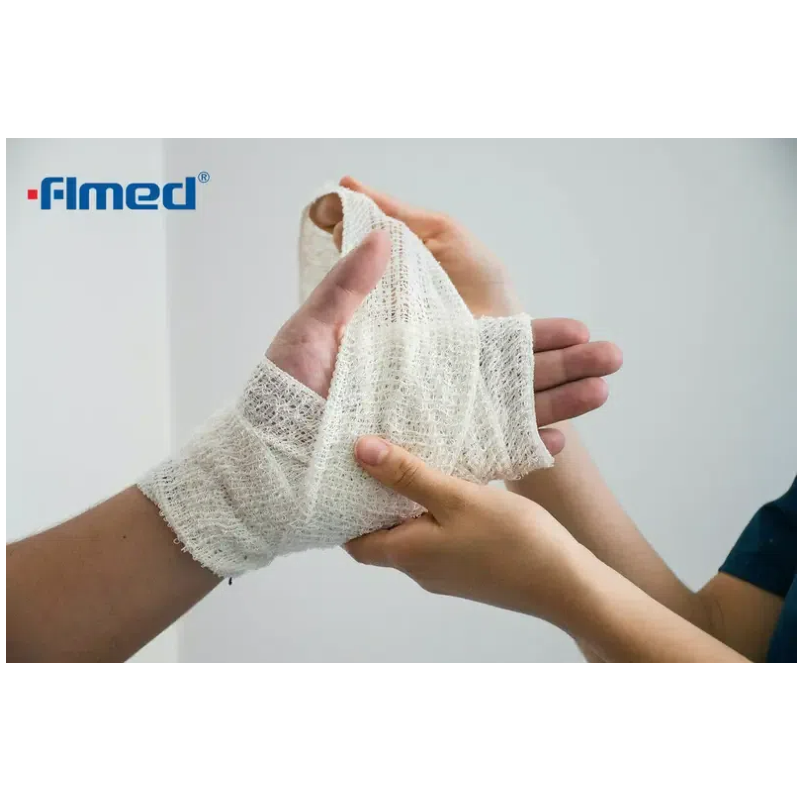
Properly securing an injury involves much more than simply covering it up. It requires a precise balance of physical pressure, moisture retention, and infection control. An incorrectly applied medical gauze wrap can quickly slip, exposing delicate tissue to outside pathogens. Conversely, applying too much tension creates a dangerous tourniquet effect. This immediately restricts capillary blood flow and significantly delays healing. Many people struggle to find the middle ground between a loose bandage and a constricting one.
This guide breaks down the essential clinical mechanics of wound bandaging. You will learn a clear, verifiable framework for selecting the right materials. We detail the exact application techniques used by healthcare professionals to secure dressings properly. Finally, you will understand the critical safety checks needed to ensure optimal recovery without complications.
Key Takeaways
Dressing vs. Bandaging: A sterile pad (dressing) must contact the wound, while the medical gauze wrap (bandage) is used strictly to secure it and apply controlled pressure.
Directional Wrapping: Always wrap from the distal end (furthest from the heart) toward the proximal end to promote venous return and prevent fluid pooling.
Tension Control: Applying Laplace’s Law means overlapping the gauze by two-thirds on each turn to distribute pressure evenly without restricting circulation.
Mandatory Safety Checks: A capillary refill test (press for 5 seconds, color should return in under 2 seconds) is non-negotiable after securing any wrap.
Dressing vs. Bandaging: Establishing the Baseline Criteria
Many people confuse the physical layers of wound care. This misunderstanding often causes maceration. Maceration is tissue breakdown caused by excess moisture. Sometimes, it also leads to the painful removal of embedded fibers. You must establish strict baseline criteria before you begin treating any injury.
The Primary Contact Layer (Dressing)
The primary layer requires a sterile, non-adherent pad. You must place this directly over the injury. It should extend at least 1 inch (2.5 cm) beyond the wound margins on all sides. This overlap creates a safe quarantine zone against bacteria. Never apply raw cotton wool directly to an open wound. The delicate fibers will embed into the healing tissue. Removing them later will destroy new cell growth and cause unnecessary bleeding.
The Secondary Layer (Medical Gauze Wrap)
The secondary layer acts strictly as your securing mechanism. Here, you apply a medical gauze wrap. Its primary function is holding the contact dressing fast. It also absorbs secondary exudate and provides structural support. Importantly, it does all this without ever adhering to the sensitive wound bed itself.
Moisture Management Reality
A common myth suggests you should let a wound "breathe" and scab over in the open air. Clinical evidence proves otherwise. Covered, appropriately moist wounds heal significantly faster. They also heal with less scarring compared to dry, open wounds. A hard scab actually forces new skin cells to tunnel underneath the crust, delaying overall recovery.
Common Mistakes to Avoid
Using a gauze roll directly on an open cut without a primary non-stick pad.
Wrapping too far away from the wound margins, leaving gaps for dirt.
Allowing the dressing to dry out completely between daily changes.
The 4-Step Clinical Framework for Applying a Medical Gauze Wrap
Applying a bandage requires a methodical approach. Skipping steps can compromise the healing environment. Follow this clinical framework to ensure proper placement, security, and safety.
Step 1: Preparation and Placement
You must clean the area thoroughly first. Wash the wound using mild soap and clean water. Avoid using cytotoxic agents like hydrogen peroxide or rubbing alcohol. These harsh liquids damage healthy cells and slow down the natural healing process. Once the area is clean and patted dry, apply your sterile dressing pad centrally over the injury.
Step 2: The Locking Turn
You need a solid anchor point before you start spiraling up the limb. Begin wrapping slightly below the wound site. We call this the distal end. Make two initial, overlapping circular turns around the limb. These first two loops act as an anchor. They hold the material securely in place so it will not slide down when you move.
Step 3: The Spiral Wrap (Overlap and Tension)
Once you anchor the bandage, you will move into the primary wrapping phase.
Wrap upward: Always move toward the heart (the proximal direction). Wrapping from the bottom upward helps push fluids back into central circulation. This prevents distal swelling in the fingers or toes.
Control the overlap: Overlap each previous layer by roughly 50% to 66% (two-thirds of the width). This creates a consistent double-layer of protection.
Manage tension: Maintain consistent, gentle tension. You should leverage Laplace’s Law. Stretching the gauze too tightly increases localized pressure exponentially. Unspool the roll slightly before it touches the skin to prevent pulling it too tight.
Step 4: Securing the Wrap
Finish your bandaging with one straight circular turn above the wound site. You have several options for securing the loose end. You can use medical tape or a self-adhering cohesive bandage. Alternatively, you can tie a flat reef knot. If you tie a knot, position it directly over the wound pad. This provides localized hemostatic pressure to help stop minor bleeding. Avoid using small metal clips. They frequently dislodge during sleep or heavy movement.
Adapting to High-Mobility Areas (Joints and Extremities)
Standard wrapping techniques fail quickly when applied to moving body parts. You must adapt your approach for areas like knees, elbows, and ankles.
The Limitation of Spiral Wraps
A basic spiral wrap works perfectly on a straight forearm. However, standard wrapping on knees, elbows, or knuckles bunches up during flexion. This bunching leads to severe friction. Over time, that friction causes localized pressure sores. It also compromises the sterile seal around the primary dressing.
The Figure-Eight Technique (Chevron)
You can solve mobility issues by using the figure-eight technique. This method supports the joint while allowing natural articulation.
Anchor the base: Start by anchoring the wrap slightly below the joint.
Cross upward: Bring the gauze diagonally across the front of the joint.
Wrap the back: Run the material straight around the back of the limb.
Cross downward: Cross diagonally downward across the front, completing an "8" shape.
Repeat: Continue overlapping the figure-eight layers by two-thirds until the dressing is fully covered.
Implementation Risk
Joint wraps require much more frequent monitoring than static wraps. Natural movement can inadvertently tighten the gauze threads over time. Check these specific bandages every few hours to ensure they have not become constrictive.
Quality Control: Circulation Checks and Safe Removal
Safety does not end once you tape the bandage down. You must actively monitor the patient for adverse reactions. Restricted blood flow represents the biggest danger in wound bandaging.
Assessing the Tourniquet Effect
A wrap applied with inconsistent tension acts like a tourniquet. Using a roll that is too narrow for a large limb also concentrates pressure dangerously. This cuts off capillary blood flow. Prolonged restriction risks tissue ischemia, where tissues die from a lack of oxygen.
The Capillary Refill Test (CRT)
You must perform the Capillary Refill Test immediately after securing any bandage. This test is non-negotiable.
Pinch the nail bed of the bandaged limb (finger or toe) for exactly 5 seconds.
Watch the nail bed turn white as you press the blood out.
Release your pinch.
Count the seconds it takes for healthy pink color to return. Healthy blood flow will return the color within 2 seconds.
Identifying Red Flags
You must remove the bandage immediately if the patient reports specific warning signs. Look out for tingling, numbness, or unusually cold skin below the injury site. If the extremity turns pale, blue, or purple, the wrap is far too tight. Loosen it right away and reapply with less tension.
Safe Removal Protocol
Removing a tight bandage requires care. When cutting a wrap off, never point the scissors directly at the patient. Insert one of your fingers between the patient's skin and the bottom blade of the bandage scissors. This technique utilizes the operator's proprioception. You will feel the metal blade against your own finger first. This guarantees you will not accidentally clip the patient's skin.
Material Evaluation: Choosing the Right Cotton Medical Gauze
Not all rolls perform equally in clinical settings. You must evaluate materials based on exudate volume, patient mobility, and known allergy profiles. Picking the wrong fabric limits your ability to control the healing environment.
Why Cotton Medical Gauze?
Healthcare providers consider 100% woven cotton medical gauze the clinical standard for secondary dressings. It provides superior breathability compared to synthetic blends. It also features high tensile strength, meaning it will not snap easily when pulled tight. Furthermore, it offers predictable absorption rates for wound fluids.
Elasticity vs. Stability
You must choose between rigid stability and flexible elasticity based on the injury location.
Feature Comparison | Standard Cotton Roll | Conforming / Stretch Gauze |
|---|
Best Use Case | Flat surfaces (shins, forearms), burns, heavy trauma. | Contours, joints (knees, elbows), high-movement areas. |
Elasticity | Zero stretch. Tension is 100% manually controlled. | High stretch. Conforms to body shapes naturally. |
Swelling Accommodation | Rigid. Does not expand if the limb swells. | Flexible. Allows for minor swelling safely. |
Application Risk | Requires precise hand tension to avoid loose fitting. | Easy to over-stretch, risking accidental compression. |
Shortlisting Logic
When procuring supplies or building a home first-aid kit, diversify your inventory. Prioritize sterile, individually wrapped cotton rolls for trauma and burn scenarios. You can rely on non-sterile cohesive wraps purely for external structural support. Having both options ensures you are prepared for both rigid immobilization and flexible joint covering.
Conclusion
Proper bandaging requires precise execution. You must select the right sizing, wrap from bottom to top, overlap correctly, and perform mandatory circulation checks. When you master this framework, you minimize pain and maximize recovery speed.
Remember your primary goal: your secondary wrap should support the healing environment, not complicate it. Avoid unnecessary tension, and never trap foreign fibers inside an open cut.
Take action today by evaluating your current first-aid inventory. Ensure you stock appropriate widths for different body parts (e.g., 2-inch rolls for arms, 4-inch rolls for legs). Finally, always seek professional medical intervention for deep wounds that rapidly bleed through the initial dressing layer.
FAQ
Q: What should I do if blood soaks through the medical gauze wrap?
A: Never remove the base dressing, as this disrupts clot formation. Apply a second layer of gauze directly over the first and apply firm, direct pressure. Seek medical attention if bleeding persists beyond 10 minutes.
Q: Can I leave a gauze wrap on overnight?
A: Yes, provided the circulation check was passed and the wrap is secured comfortably. However, dressings should typically be inspected and changed daily unless directed otherwise by a physician.
Q: How tight is too tight for a wound wrap?
A: If you cannot slide a finger comfortably under the edge of the bandage, or if the patient experiences throbbing, coldness, or numbness below the injury site, the wrap is too tight and must be loosened immediately.

 English