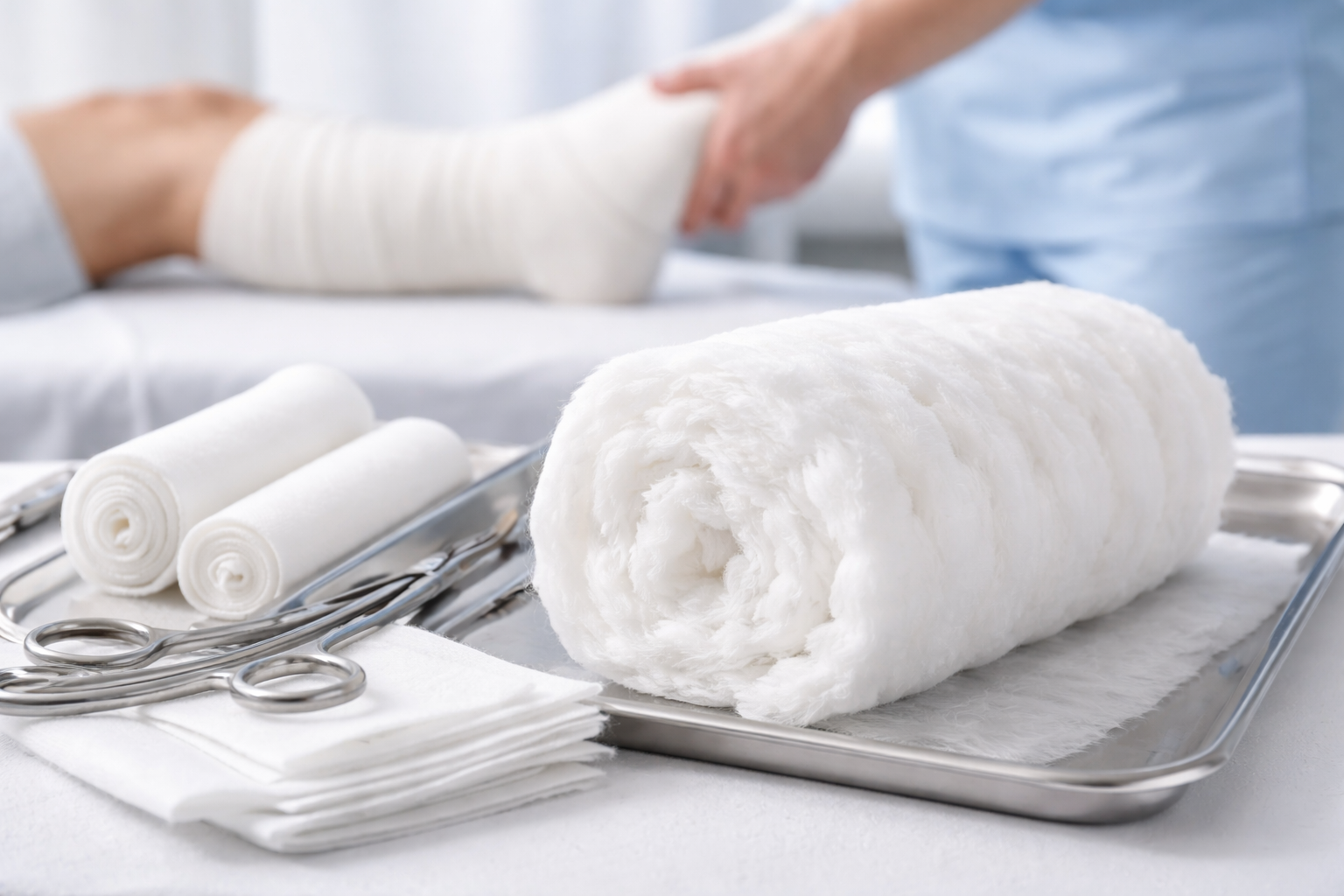
Medical dressings remain a fundamental staple in modern healthcare environments. Yet, we often view them merely as basic first-aid commodities rather than advanced wound management tools. This outdated perspective needs an urgent update. We must recognize these materials as critical components for rigorous infection control and comprehensive tissue repair.
Clinical practices have shifted significantly in recent years. The era of moist wound healing transformed standard gauze from a universal primary dressing into a highly specialized secondary layer. Using the wrong material directly against delicate tissue can cause severe complications. Proper selection minimizes hidden nursing expenses, prevents complications, and accelerates tissue recovery.
This guide serves as a practical decision-support tool for facility procurement teams, clinical practitioners, and advanced caregivers. You will learn how to evaluate material differences and standardize daily application protocols. We will also help you reduce hidden labor expenses and improve overall patient outcomes. Let us explore the specialized functions these essential dressings serve today.
Key Takeaways
Clinical Positioning: Medical gauze pads are primarily used for exudate absorption, wound packing (sinus tracts), and secondary coverage, rather than direct mechanical debridement.
Material Matrix: Selection between woven (cotton, high-drainage) and non-woven (synthetic, non-adherent) directly impacts both tissue trauma during removal and total healing time.
Cost Efficiency: While unit costs are low, the Total Cost of Ownership (TCO) increases dramatically if improper pad selection leads to frequent dressing changes or higher infection rates.
System Integration: Combining sterile pads with a medical gauze roll provides optimal securement without compromising local blood circulation.
Primary Clinical Functions and Application Scenarios
Caregivers frequently misunderstand the exact mechanical roles of modern dressings. You must match the physical properties of the material to the biological needs of the injury. We can categorize these primary functions into three main areas.
Exudate Management and Fluid Absorption
Effective moisture management prevents serious complications around the injury site. Gauze acts as a reliable reservoir for wound exudate. It wicks harmful excess moisture away from the wound bed. This active wicking action prevents periwound maceration. Maceration occurs when surrounding skin becomes waterlogged, weak, and prone to tearing.
Ply counts directly determine volumetric absorption limits. Higher ply counts offer greater fluid capacity. You must choose the appropriate thickness based on drainage levels.
Ply Count | Clinical Application | Fluid Capacity Profile |
|---|
4-Ply | Minor abrasions, outer protection | Low absorption, highly breathable |
8-Ply | Moderate drainage, general padding | Balanced absorption and flexibility |
12-Ply | Heavy exudate, surgical recovery | Maximum volumetric fluid retention |
Deep Wound Packing and Sinus Tracts
Tunneling injuries require careful structural support. Clinicians use gauze to fill dead space in deep sinus tracts. Leaving empty spaces allows bacteria to proliferate in trapped fluids. Packing the cavity promotes healthy bottom-up tissue granulation.
You must practice extreme caution during this procedure. Over-packing creates excessive pressure against delicate capillary beds. This pressure restricts local blood flow and starves the tissue of oxygen. Oxygen deprivation ultimately delays the entire healing process.
Secondary Dressing Support
Advanced primary dressings require external protection. Hydrocolloids and alginates interact directly with the wound bed. Clinicians then place medical gauze pads over these primary layers.
This outer barrier manages the overall bacterial balance. It also provides essential cushioning to protect the site from secondary trauma. Secondary coverage keeps the primary treatment securely in place.
Woven vs. Non-Woven: Evaluating Material for Patient Outcomes
The manufacturing process defines how these materials interact with human tissue. You must understand the distinction between woven and non-woven structures. This choice directly influences tissue trauma during removal.
Woven Gauze Pads (100% Cotton)
Manufacturers create woven pads using intersecting cotton threads. This loose structure maximizes fluid uptake and allows excellent breathability. They handle heavy exudate remarkably well. Clinicians also use them to apply temporary surgical pressure to bleeding sites.
However, woven cotton presents specific clinical risks. The loose threads have a high linting potential. They can shed small fibers directly into the wound bed. These retained fibers often trigger adverse foreign-body reactions. Therefore, you should rarely use woven cotton as a primary contact layer.
Non-Woven Gauze Pads (Synthetic Blends)
Non-woven variations typically utilize rayon and polyester blends. Factories compress these synthetic fibers together rather than weaving them. This process creates higher tensile strength and a distinctly smoother surface.
These synthetic blends exhibit minimal linting. They are ideal for direct contact with newly granulated tissue. Surgeons frequently apply them over closed incisions. They ensure painless removal and reduce the risk of disrupting fragile cells during dressing changes.
Feature | Woven (Cotton) | Non-Woven (Synthetic) |
|---|
Primary Material | 100% Natural Cotton | Rayon / Polyester Blends |
Linting Risk | High (Sheds fibers easily) | Very Low (Condensed structure) |
Best Clinical Use | Heavy drainage, secondary layer | Primary layer, delicate tissue |
Removal Trauma | High (Can adhere to scabs) | Low (Smooth, painless removal) |
Specialty Gauze Types for Advanced Wound Profiles
Standard materials cannot resolve every clinical challenge. Manufacturers have developed specialized variations for complex medical scenarios. These advanced profiles address specific healing barriers.
Non-Adherent and Impregnated Pads
Dry materials easily stick to open injuries. Non-adherent pads solve this problem completely. Manufacturers treat these pads with specialized compounds. Common treatments include petrolatum, zinc, or cooling hydrogels.
These impregnated layers maintain a consistently moist microenvironment. They actively prevent harsh scab obstruction. Preventing dry scabs allows tissue to granulate smoothly. This mechanism significantly reduces depressed scar formation.
High-Absorbency and Trauma Pads (ABD Pads)
Severe trauma cases produce overwhelming fluid volumes. Standard dressings fail quickly under these conditions. Army Battle Dressings (ABD pads) feature multi-layered, highly absorbent cores.
They also include a specialized fluid-repellent backing. This barrier prevents dangerous moisture strike-through. Surgeons rely on them for post-operative recovery and severe lacerations.
Integration and Securement Strategies
Proper application requires reliable securement. Taping directly to fragile skin causes painful epidermal stripping. Instead, clinicians integrate standard pads with a medical gauze roll.
You can use the roll for gentle circumferential limb wrapping. This technique keeps everything secured tightly over high-mobility joints. It eliminates reliance on harsh medical adhesives entirely.
X-Ray Detectable Gauze
Surgical environments demand strict safety compliance. Retained surgical items (RSI) pose severe legal and health risks. X-ray detectable variations feature specialized blue threads woven into the fabric.
These threads contain barium sulfate. Barium sulfate appears vividly on post-operative X-rays. This simple feature guarantees complete removal before surgical closure.
Unit Price vs. Total Care Economics
Many procurement teams focus strictly on the initial purchase price. This narrow view ignores massive downstream expenses. Improper material selection drives up total clinical spending. We must evaluate these materials through a comprehensive economic lens.
Debunking the "Wet-to-Dry" Debridement Myth
Historically, nurses soaked cotton in saline and packed the wound. They allowed the material to dry completely. They then ripped it out to remove necrotic tissue. This "wet-to-dry" mechanical debridement is clinically outdated.
Evidence proves this non-selective method destroys healthy leukocytes. It causes severe tissue cooling and local hypoxia. Hypoxia halts the cellular repair cycle. Prolonged healing times dramatically increase overall facility expenses.
Hidden Labor and Compliance Costs
You cannot ignore the hidden costs of outdated protocols. The basic unit price of woven cotton is remarkably low. However, you must weigh this against severe hidden variables.
Frequent Dressing Changes: Low-capacity materials require multiple daily interventions. Nursing labor costs far exceed the physical material savings.
Infection Interventions: Traditional loose cotton provides a minimal bacterial barrier. Semi-occlusive modern dressings perform much better. Increased infection rates demand expensive secondary interventions.
Prolonged Bed Stays: Delayed healing keeps patients in the facility longer. Extended stays drain operational budgets quickly.
Pain Management: Traumatic removal requires additional analgesic medication and clinical monitoring time.
Procurement, Storage, and Implementation Standards
Quality control begins long before the product reaches the patient. Proper procurement and storage protocols guarantee safety. You must establish strict standard operating procedures (SOPs) for your facility.
Sterilization and Manufacturing Certifications
Procurement teams must verify industrial sterilization methods. Reputable manufacturers use reliable techniques. Gamma irradiation deeply penetrates sealed packaging to destroy microbes. Ethylene Oxide (EO) gas processing is another highly acceptable industrial standard.
Always check for international compliance markers. Insist on ISO 13485 certification for medical devices. This ensures consistent quality control throughout the manufacturing lifecycle.
Inventory Lifecycle Management
Even sterile packaging degrades under poor environmental conditions. You must implement robust inventory lifecycle management.
Temperature Control: Maintain storage rooms between 59°F and 86°F.
Humidity Limits: Keep relative humidity strictly below 70% to prevent seal degradation.
Rotation Protocol: Always use a First-In-First-Out (FIFO) rotation system. This guarantees you consume older stock before packaging integrity fails.
Standardizing Application SOPs
Inconsistent application methods cause erratic patient outcomes. Facilities must enforce a standardized nursing protocol. Follow these sequential steps for optimal results:
Assessment: Evaluate the wound depth, exudate volume, and surrounding skin health.
Aseptic Cleaning: Flush the area with sterile saline to remove surface debris.
Appropriate Pad Selection: Choose woven for heavy drainage or non-woven for delicate granulating tissue.
Securement: Apply the pad and wrap gently. Avoid restricting local circulation.
Scheduled Monitoring: Check for visible strike-through instead of following rigid timeframes.
Conclusion
Successful clinical outcomes require precise material selection. You must match specific material properties to exact healing phases. Never treat all medical textiles as interchangeable commodities. Woven options provide necessary drainage, while non-woven synthetic blends protect fragile new cells. Proper selection directly influences recovery speed and patient comfort.
Procurement and clinical teams should take immediate action. Audit your current supply kits this week. Phase out any outdated wet-to-dry debridement practices immediately. Finally, build a tiered inventory system. Ensure your facility stocks both high-drainage woven options and advanced non-adherent technologies to handle any clinical scenario.
FAQ
Q: What is the difference between a gauze pad and a gauze sponge?
A: The main distinction relies on packaging and sales units rather than material differences. Pads are typically sold individually wrapped in sterile envelopes for single-use applications. Sponges usually arrive in multi-packs or bulk non-sterile sleeves designed for higher-volume clinical settings and surgical suites.
Q: Should I put a dry medical gauze pad directly on an open wound?
A: No, you should avoid placing dry woven materials directly on open injuries. Dry fibers absorb moisture and adhere firmly to the wound bed. Ripping them off causes painful tissue trauma. We recommend using non-adherent impregnated layers for direct contact with open, dry wounds.
Q: How often should a medical gauze pad be changed?
A: You should not rely on a flat time estimate. Change frequency depends heavily on exudate volume. Monitor the outer layer closely. You must replace the dressing immediately if you notice visible fluid strike-through, loose edges, or increased clinical signs of local infection.
Q: Do sterile gauze pads expire?
A: Yes, they do have expiration dates. The actual cloth material does not degrade quickly. However, the expiration date correlates directly to the integrity of the sterile packaging seal. Over time, environmental factors weaken the adhesive seal, potentially allowing dangerous bacterial contamination inside.

 English